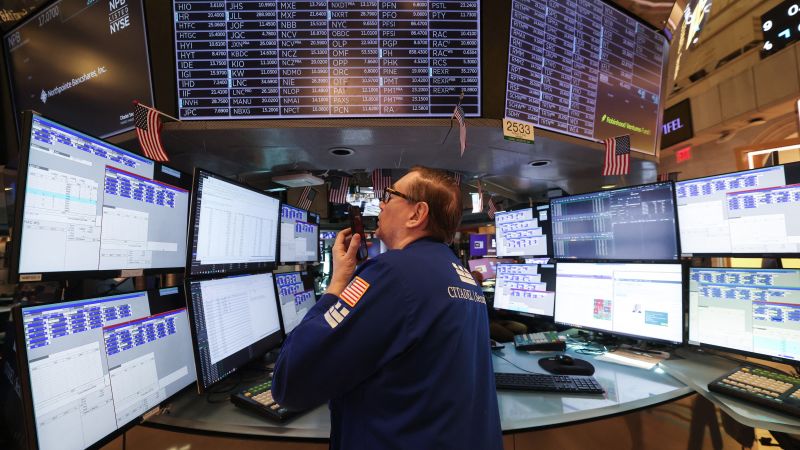
The S&P 500 has achieved its longest winning streak since 2023, marking an impressive eight weeks of gains. This surge, driven by robust corporate earnings and a fervor for artificial intelligence (AI) technologies, has allowed investors to largely overlook escalating geopolitical tensions, particularly the ongoing conflict in Iran.
However, not all trends paint a rosy picture for the stock market. In the bond market, rising U.S. Treasury yields are causing significant concern, potentially disrupting the momentum of equities. Currently, Treasury yields are at their highest levels in a year, as bond prices have fallen. This shift has led traders to anticipate that the Federal Reserve will maintain current interest rates over the coming months, with a possible rate hike later this year. This expectation is heavily influenced by the closure of the Strait of Hormuz, resulting in soaring oil prices that are reaching four-year highs and stoking inflation fears.
The rise in Treasury yields translates to higher borrowing costs for consumers, exacerbating financial strains at a time when consumer sentiment remains uncertain, as highlighted by a recent University of Michigan survey. Rob Williams, chief investment strategist at Sage Advisory, noted that such increases in yields complicate the environment for consumers, affecting everything from housing affordability to overall spending.
Despite these concerns, corporate America has shown resilience with strong profit reports. According to FactSet, the S&P 500 is on track to achieve its highest quarterly earnings growth rate since 2021. With a total of 18 record highs reached this year, the index is on the cusp of another milestone, fueled largely by advancements in technology and AI.
Notably, the S&P 500’s performance is heavily influenced by a small group of high-value tech stocks. Since the onset of the conflict with Iran, the S&P 500 has increased approximately 8.6%, while an equal-weighted version of the index has only managed a gain of under 1%. Jeff Klingelhofer, a portfolio manager at Aristotle, remarked on the narrowing scope of successful investments within the market, pointing out that investors may be disregarding significant warning signals.
The ten-year Treasury yield has climbed from 4.34% to about 4.56% since March 30, reflecting growing inflation concerns exacerbated by the geopolitical climate and rising government debts. Klingelhofer noted that while there are positive drivers for stock performance, the persistence of high yields may eventually strain consumer spending, a point underscored by increasing auto loan delinquency rates.
The current environment is also characterized by “greed,” as indicated by CNN’s Fear and Greed Index, which has registered in the “greed” territory since mid-April. This sentiment has coincided with the S&P 500 hitting its first record high since the start of the Israeli-Iranian conflict.
Treasury yields typically fluctuate in response to inflation and economic growth projections. While worries about inflation continue to unsettle some investors, strong economic indicators—such as a robust 4.3% GDP projection from the Atlanta Federal Reserve—offer some reassurance. Moreover, April’s unemployment rate held steady at 4.3%, which is relatively low.
Kriti Gupta, a global investment strategist at JPMorgan Private Bank, emphasized that while large fluctuations in interest rates could threaten consumer spending, the prevailing economic conditions—at least for now—may mitigate these concerns for the average American. Market participants may overlook rising yields if they remain focused on the economy’s strong fundamentals, but this optimism could be overshadowed by persistent inflation fears, particularly in the context of soaring oil prices.
As oil prices hover close to $100 per barrel—up over 68% since the year began—the potential for heightened inflation remains. A crucial metric, the core Consumer Price Index (CPI), which excludes food and energy prices, registered a year-over-year increase of 2.8% as of April. If core CPI were to rise above 3% in the months ahead, further increases in Treasury yields could place additional pressure on stock prices, as noted by strategists at Barclays.
Overall, the future trajectory of the stock market will largely depend on an equilibrium between economic growth and rising inflation pressures. As Gupta succinctly put it, this delicate balance is what the U.S. market is currently navigating amid the shifting landscape surrounding the conflict in Iran.