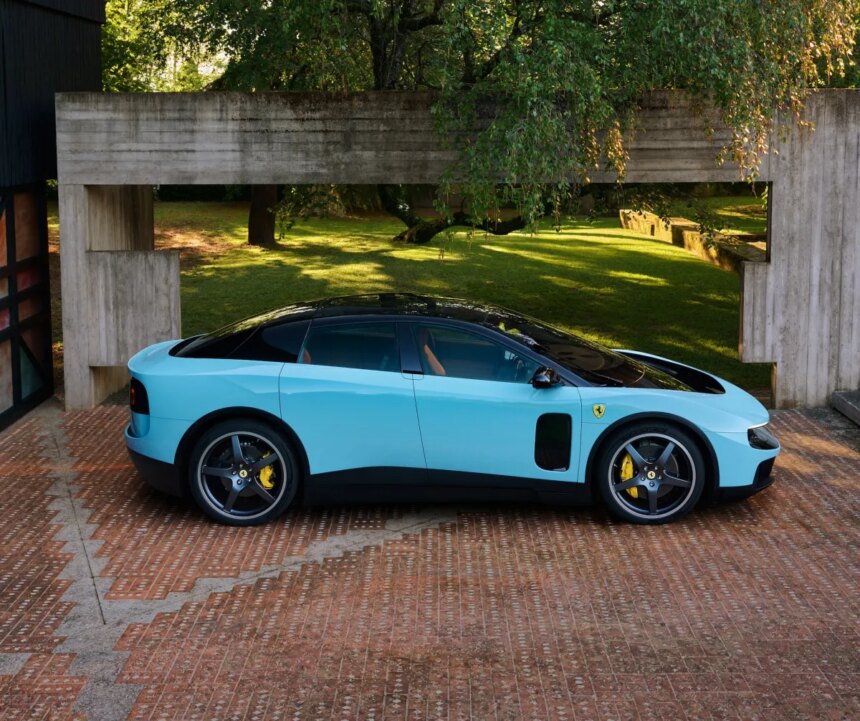
Ferrari recently unveiled its first electric vehicle, the Luce, and the reaction has been overwhelmingly negative. Revealed on Monday, the Luce is a five-seater, and its design was largely spearheaded by renowned designer Jony Ive and his firm, LoveFrom. While it boasts impressive specs – a staggering 1,000 horsepower and the ability to accelerate to 60 miles per hour in a little over two seconds – it has quickly garnered criticism, positioning it as one of the most ridiculed new vehicles since Tesla’s Cybertruck.
The backlash against the Luce spans a wide range of opinions, from quick, dismissive critiques to intense vitriol. The negative response is palpable in the market, with Ferrari’s stock price taking a hit; even some mainstream news outlets have expressed skepticism, with Bloomberg referring to the Luce as “quite a stretch.”
A central question in this outcry is: Who is the Luce intended for? At an estimated price of around $650,000, the vehicle is not designed for the average consumer. Furthermore, Ferrari is known for its selective clientele; over 80% of the 14,000 Ferrari buyers last year were existing owners. It’s challenging to envision longtime Ferrari enthusiasts embracing a vehicle that strays from the traditional fierce lines that have defined the brand for decades.
There could be potential appeal for other car designers, as the interior design includes numerous clicky buttons and knobs, marking a significant departure from Ive’s usual minimalistic approach. This could inspire innovation in other car companies.
Regulatory compliance could also be a factor. With the European Union imposing strict limits on the sale of internal combustion engine vehicles by 2035, the Luce could represent Ferrari’s first step towards meeting these regulations. In a discussion with Cleo Abram, it was revealed that regulatory pressures heavily influenced Ive’s design process. He acknowledged the challenge faced by Ferrari in transitioning to electric vehicles, likening it to how luxury watchmaker Patek Philippe adapted during the shift from mechanical to quartz movements.
Despite the compliance angle, there are indications that Ferrari intends for the Luce to be a profitable venture from the outset. The company’s chief marketing officer voiced a desire for the Luce to be “polarising,” indicating it isn’t strictly aimed at existing Ferrari customers. Instead, the focus appears to be on a different demographic—individuals who currently own electric cars.
This pivot raises another pertinent question: Could the target audience for the Luce be Chinese consumers? Historically, Chinese buyers have accounted for about 10% of Ferrari sales, but that figure has dwindled in recent years. Executives at Ferrari have expressed a desire for the Luce to rejuvenate interest in their brand in the booming Chinese market, particularly given the market’s affinity for high-performance, technologically advanced, yet affordable vehicles.
When viewed through this lens, the design of the Luce begins to make more sense, as it draws parallels to the stylistic trends in China’s rapidly growing automotive industry. The crucial consideration remains: will Chinese consumers, who have a plethora of high-performance options available, be willing to pay a premium for the luxury that comes with the Ferrari name?