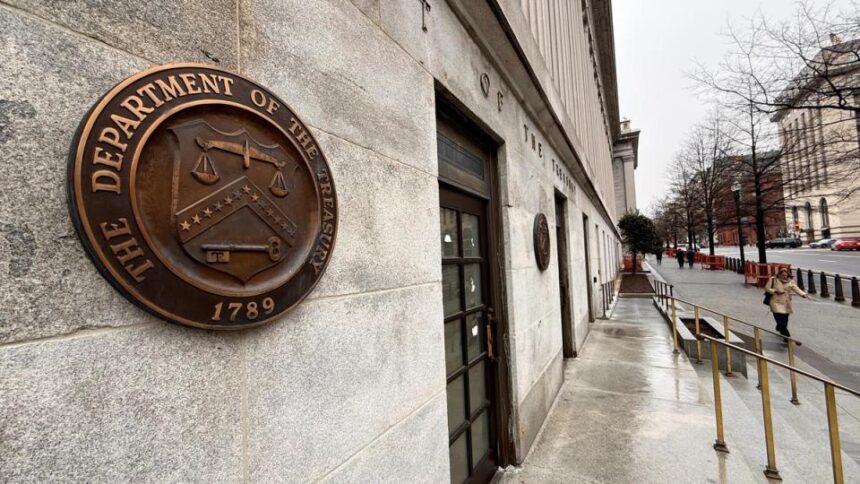
A prominent fund manager has raised significant concerns regarding the current trajectory of Bitcoin’s value, which has recently seen a marked decline. As of now, Bitcoin is trading at approximately $73,069.66, with analysts suggesting that the ongoing selloff may intensify in light of impending U.S. Treasury operations. These operations are projected to siphon roughly $150 billion in liquidity from the financial system, a maneuver that could have profound implications for the cryptocurrency market.
Michael Kramer, the founder and CEO of Mott Capital Management, shared insights in his latest market analysis, emphasizing Bitcoin’s role as a liquidity indicator that often surpasses other financial instruments. He stated, “In my experience, Bitcoin tends to be a better liquidity indicator than most other instruments. If the Treasury settlements are a drain on liquidity, then Bitcoin could be heading much lower.”
The U.S. Treasury frequently issues bonds and bills as a means to fund government expenditures. When these securities are sold, the cash received from investors is deposited into the Treasury’s account at the Federal Reserve. This process effectively removes liquidity from the banking system, thus reducing the amount of available cash for alternative investments. During periods of heavy issuance, these Treasury settlements can create significant liquidity drains.
Kramer specifically highlighted that the Treasury operations scheduled from May 28 to June 5 could result in a considerable liquidity drain, breaking down as follows:
– $15 billion in T-bills settling on Thursday
– $47 billion in coupon settlements on Friday
– $68 billion on Monday
– $16 billion in T-bill settlements on Tuesday
– An additional T-bill settlement on June 4 estimated between $5 billion and $15 billion
The prevailing market conditions, including those in the cryptocurrency space, generally thrive on the availability of liquidity. When cash is systematically extracted from the market, even for short durations, investors tend to become more risk-averse, which can dampen their enthusiasm for high-risk assets such as Bitcoin.
Early indicators of this tightening liquidity situation are already notable, with Bitcoin experiencing an approximate 11% decline from its peak value of over $82,500 earlier this month. At the time of reporting, the cryptocurrency stood near $73,000. The erosion of key support levels, particularly the recent breach of the $75,000 mark, serves as a significant sign that liquidity conditions are constricting. While this does not guarantee further price dips, it highlights a crucial consideration often neglected within crypto circles: the impact of macroeconomic factors such as government borrowing and cash flow on Bitcoin’s price dynamics.
For everyday investors, the prevailing lesson appears to be clear: the movement of Bitcoin’s price may sometimes be influenced more by overarching economic conditions than by developments specific to the cryptocurrency realm. As liquidity becomes scarce, investors are advised to stay vigilant and informed about these macro forces that can significantly impact their investment decisions.