In a recent inquiry, a reader expressed concerns about their investments in major energy stocks, including Exxon, Shell, and Devon Energy, purchased during a period when oil prices hit a historic low. The individual reported substantial unrealized gains from these investments and signaled a desire to rebalance their portfolio amidst prevailing geopolitical uncertainties affecting oil prices.
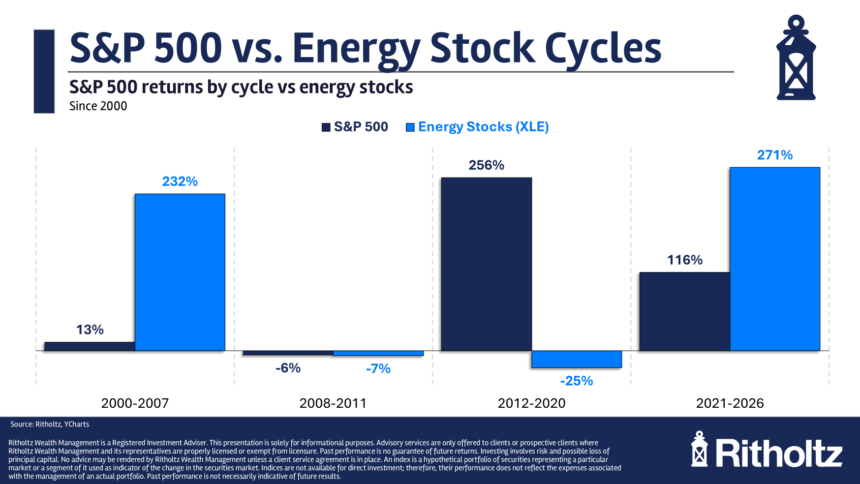
Reflecting on their initial strategic decisions, the reader noted that buying oil stocks during the tumultuous spring of 2020 proved to be a sound contrarian choice. During that time, energy stocks were generally suffering, with the sector reflecting negative total returns going back to 2005. However, since the lows of April 2020, both Exxon and Devon Energy have surged, with increases of over 300%. Overall, the energy sector ETF has experienced significant gains, outpacing the S&P 500 during this recovery phase.
Despite these impressive returns, the reader expressed apprehension about potential market pullbacks driven by geopolitical dynamics, particularly concerns around oil supply disruptions. They questioned the reliability of current market predictions, noting the recurring theme of analysts forecasting $200 per barrel oil prices amid international conflicts, which have not materialized as expected.
In response to the reader’s concerns, financial experts emphasized the importance of not allowing geopolitical events to dictate investment strategies. They cautioned that the unpredictability of oil prices means that decisions based solely on current events may not yield favorable outcomes. Instead, a focus on creating a simplified investment strategy is advisable.
Experts recommend that the reader establish a clear asset allocation plan, which can help guide investment decisions without being overly influenced by market volatility. An established allocation can dictate when to sell or buy based on current asset class weights, relieving some of the stress associated with daily market fluctuations.
Moreover, the financial community advised against the practice of constantly monitoring market changes, as this can lead to burnout and impede long-term investment strategies. Instead, setting reasonable investment criteria and automating as many processes as possible can enhance decision-making efficiency.
Ultimately, the message is clear: the priority should be on thoughtful investment management that allows for personal well-being and family time rather than becoming preoccupied with the rollercoaster of market activity. As the reader navigates their portfolio, they are encouraged to seek a balance between capitalizing on market opportunities and maintaining a measured approach to investing.