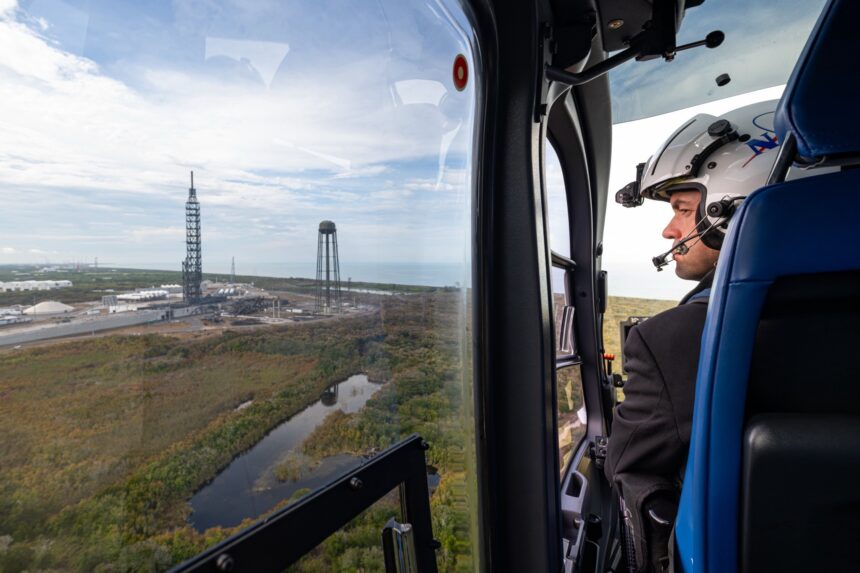
The U.S. Space Force has recently awarded a task order to Blue Origin for a significant mission involving the National Reconnaissance Office (NRO). This announcement comes shortly after a critical incident involving the company’s New Glenn rocket, which experienced an explosion during a hot fire test on May 28 at Cape Canaveral Space Force Station in Florida.
The task order is part of the National Security Space Launch (NSSL) Phase 3 Lane 1 program, which is designed for national security missions that can tolerate a higher level of launch risk compared to more stringent military operations. Specifically, the mission, labeled NRO Task Order-4, mandates a single launch from Cape Canaveral between late 2027 and early 2028.
Remarkably, the award was granted just hours before the New Glenn rocket anomaly occurred. Despite the setback, the Space Force reaffirmed its commitment to supporting Blue Origin, indicating a desire to work collaboratively to address the recent issues with the rocket. The Space Systems Command emphasized the partnership, stating, “The U.S. Space Force and NRO remain committed partners with Blue Origin and will work with them on the New Glenn vehicle anomaly.”
Col. Eric Zarybnisky, who oversees the NSSL program, acknowledged the efforts of first responders and the Space Launch Delta 45 team for ensuring public safety during the incident. He noted that the challenges posed by rocket science are inherent in the industry, reminding stakeholders of the critical nature of space capabilities.
In response to the incident, Blue Origin’s CEO David Limp announced that the company has regained access to Launch Complex 36 and is actively investigating the cause of the hot fire anomaly. He expressed optimism about the next steps, stating, “We will start clearing the pad soon and have a good rebuild plan in place.”
The procurement of this task order aligns with the Pentagon’s strategy to diversify its pool of launch providers for military and intelligence operations, reflecting an increasing need for reliable access to space. Unlike the more rigorous NSSL Phase 3 Lane 2 missions, which require complete certification and cater to high-stakes national security payloads, Lane 1 missions are structured similarly to commercial contracts, allowing providers with at least one successful flight, like Blue Origin, to compete.
Blue Origin was deemed eligible for participation in Lane 1 missions starting in June 2024, alongside competitors such as SpaceX and United Launch Alliance. However, the Space Force chose not to disclose the financial details of the task order awarded to Blue Origin, leaving uncertainties about the scale of the investment involved in this partnership.