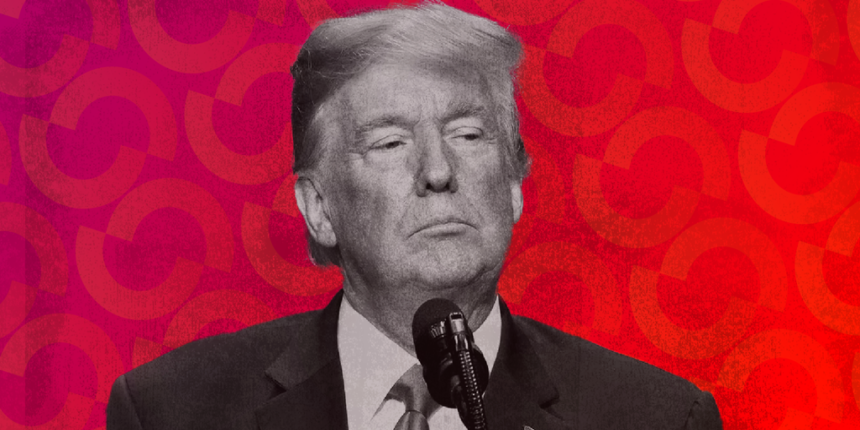
A recent executive order issued by President Donald Trump has heightened scrutiny around financial services extended to undocumented immigrants, mandating federal regulators to enforce stricter fraud screening and limit credit lines. This policy has sparked significant debate among experts and advocates, who argue that it could have unintended consequences, potentially isolating millions from traditional banking solutions and inadvertently pushing them towards organized crime.
The executive order aims to restore what the administration describes as “integrity” to the financial system, citing national security concerns. It directs agencies such as the Treasury Department to consider new rules to mitigate risks associated with the financial activities of undocumented individuals. The White House underscored that inadequacies in customer identification protocols have previously allowed criminal organizations to exploit U.S. financial institutions.
Critics note that this regulatory move bears resemblance to the Biden administration’s alleged “Operation Chokepoint 2.0,” an initiative purportedly aimed at limiting crypto firms’ access to banking services by labeling them as a “reputational risk.” This perceived assault on the crypto sector fueled congressional inquiries and brought to light internal regulatory documents revealing such strategies.
Supporters of the executive order contend that implementing tighter financial controls is a necessary step in safeguarding banks from the risks presented by engaging with unverified clients. However, opponents warn that pushing undocumented immigrants away from regulated financial institutions may lead them to rely on riskier alternatives, such as organized crime or underground banking systems.
The embrace of cryptocurrency by the Trump family, in response to mounting pressure from banks, serves as a parallel to the current challenges faced by undocumented immigrants in navigating the financial landscape. Eric Trump and Donald Trump Jr. have publicly stated that their entry into the crypto sphere was driven by necessity after experiencing difficulties with traditional banking.
Some policy experts argue that the executive order essentially designates banks as enforcers of immigration policy, creating an atmosphere of oversight akin to a surveillance state. Nicholas Anthony of the Cato Institute highlighted that while some undocumented individuals might turn to cryptocurrencies as a refuge, others might resort to established organized crime networks for monetary transactions due to their familiarity and reliability.
In the legislative arena, financial surveillance raises concerns among conservatives and progressives alike. Lawmakers, such as Rep. Tom Emmer (R-MN) and Rep. Juan Vargas (D-CA), have voiced their fears that heightened monitoring may infringe upon civil liberties.
In response to these developments, the regulation of stablecoins and peer-to-peer payment platforms appears poised to come under scrutiny as the executive order calls for guidance specific to these financial tools. Currently, undocumented immigrants have access to Bitcoin ATMs for converting cash into crypto, although companies such as Bitcoin Depot have faced operational setbacks.
Financial advocates caution that alternative options like cryptocurrencies do not possess the consumer protections laid out for conventional monetary channels. Lack of safeguards could exacerbate vulnerabilities for users and push them deeper into unregulated financial territories.
Amidst these changes, experts like former World Bank economist Dilip Ratha emphasize that historically heightened banking regulations post-9/11 have already led many immigrants to either obtain proper documentation or lose banking access altogether. As debates surrounding immigration enforcement and financial regulation continue, the ramifications of these policies on both the banking system and vulnerable communities will remain at the forefront of discussions.