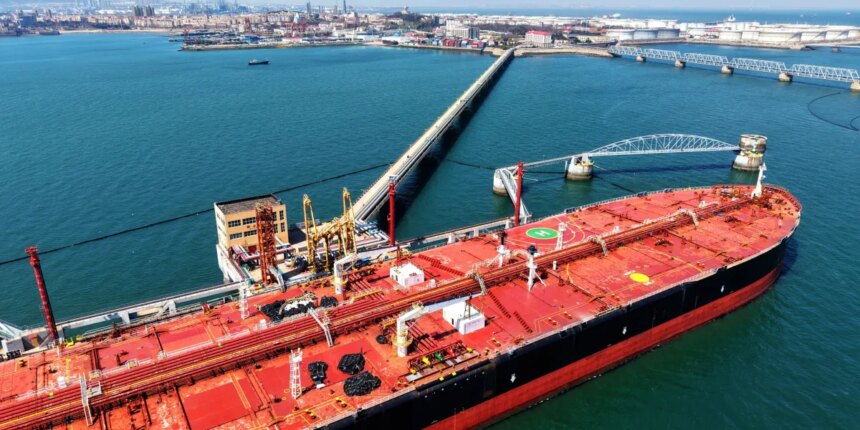
China has emerged as a key player in the global oil market during a period of heightened uncertainty, acting as a stabilizing force amidst significant supply challenges. The country’s actions may be pivotal in mitigating potential crises, as crude oil prices remain surprisingly stable despite escalating tensions in the Persian Gulf.
For several months, analysts and investors have been perplexed as to why crude oil prices have not escalated to worst-case predictions. This has occurred even with substantial portions of the world’s oil supply, particularly from the Persian Gulf, effectively rendered unavailable. Factors contributing to the situation include Saudi Arabia rerouting exports away from the critical Strait of Hormuz, nations across Asia imposing fuel rationing measures, and major oil-consuming countries releasing oil from their strategic reserves.
However, these measures have not fully compensated for the shortfall of over 10 million barrels a day, exacerbated by a U.S. naval blockade on Iran, which curtailed additional supply. The ongoing gridlock between the U.S. and Iran regarding a potential ceasefire further heightens anxieties in the market, as many fear a critical inventory crisis.
Exxon’s Senior Vice President Neil Chapman recently highlighted the alarming trend of diminishing inventory levels at an industry conference. He indicated that global oil inventories are nearing dangerously low thresholds, emphasizing that once these levels are reached, prices could surge dramatically. Analysts predict that this moment could arrive as early as June, but uncertainty remains regarding China’s substantial oil stockpiles, estimated at approximately 1.4 billion barrels.
Recent data revealed a significant 20% decline in China’s crude imports in April, falling to 9.4 million barrels per day — the largest decrease since the pandemic began. Projections for May suggest an even steeper decline, potentially dropping to 7 million barrels per day. Contributing to this situation is Beijing’s cap on fuel exports, leading to reduced consumption in Chinese refineries. Additionally, China seems to have decreased earlier oil hoarding activities and is now tapping into its vast reserves.
This shift in China’s import dynamics could delay a critical turning point for the global oil market, according to Hamad Hussain, an economist from Capital Economics. He had initially forecasted a significant rise in Brent crude prices by the end of June, contingent on sustained demand trends. However, he noted that if current consumption patterns persist through June, the anticipated stress in the global oil market might be pushed back to July.
The urgency of a stabilizing scenario is underscored by warnings from JPMorgan regarding commercial oil inventories in developed countries nearing “operational stress levels” by early June. Chevron’s CEO has also indicated that as the market’s capacity to absorb shocks diminishes, prices are likely to rise in the coming weeks.
Analysts at UBS have echoed these concerns, stating that oil inventories are approaching record lows and cautioning that prices might become increasingly volatile, especially if panic buying occurs and disruptions continue.
Contrastingly, Robin Brooks from the Brookings Institution points out that the seemingly limited reaction in oil prices reflects a more resilient market than anticipated. His observations highlight strategic shifts, such as South Korea reducing its reliance on Saudi oil imports in favor of suppliers from Canada and Malaysia, illustrating the adaptive nature of global oil markets.
Brooks maintains that the current supply shock has not been as devastating as some feared, suggesting that there was not sufficient demand needing to be curtailed, which is why prices have not spiraled to catastrophic levels. This ongoing situation underscores the complexities of global oil dynamics as countries and markets navigate shifting realities.