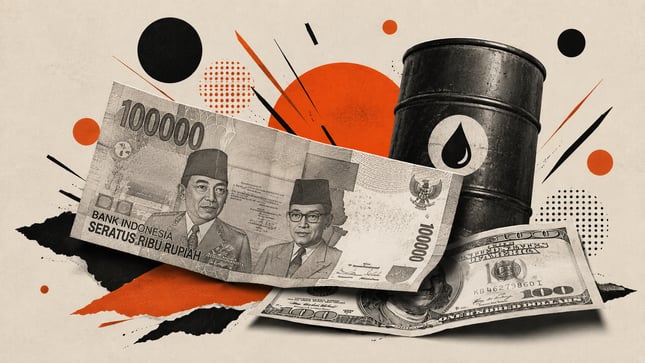
The Indonesian Rupiah (IDR) has recently fallen to a record low, surpassing the significant threshold of 18,000 per US Dollar, coinciding with a sharp downturn in the nation’s equity markets. This dramatic currency depreciation has been attributed to a convergence of geopolitical uncertainties, a critical shortage of global dollar liquidity, and rising energy prices that have adversely affected Indonesia as a net oil-importing economy.
Adding to these external pressures are significant domestic issues surrounding the independence of Bank Indonesia (BI). New growth-mandate legislation has raised concerns among investors regarding the bank’s ability to prioritize inflation control and exchange rate stability. Analysts suggest that the broadening of BI’s mandate to actively pursue economic growth has unsettled market confidence, especially in light of an ongoing energy crisis in the Middle East that has severely impacted oil imports. This structural shift has left the already undervalued Rupiah particularly vulnerable.
Financial analysis from Brown Brothers Harriman (BBH) indicates that while the IDR may appear fundamentally cheap, the currency is still at high risk of further decline until the pressures from the energy crisis are alleviated. Meanwhile, analysts at MUFG report that the decline of the Rupiah is being exacerbated by significant foreign capital outflows from Indonesian equities and rising global bond yields. These funding challenges within the local market have heightened the risk of the Rupiah depreciating even further against the US Dollar.
Market liquidity conditions for the USD/IDR pair are reportedly at critical levels, comparable to the stresses observed during the early stages of the COVID-19 pandemic in March 2020. This scenario points toward continued upward pressures on the USD/IDR exchange rate, suggesting a challenging environment for the Rupiah.
Financial institutions are projecting a bleak outlook for the near term, citing the Indonesian currency’s structural vulnerabilities. BBH highlights that although the Rupiah is technically undervalued concerning local economic fundamentals, it cannot escape the ongoing downward trends until global energy issues are resolved. Analysts at MUFG foresee clear risks of further increases in the USD/IDR exchange rate, particularly as market stress intensifies. However, they also note that with current investor positions heavily concentrated, any positive developments regarding geopolitical tensions or clarity in policy could trigger a rapid market correction in favor of the Rupiah.