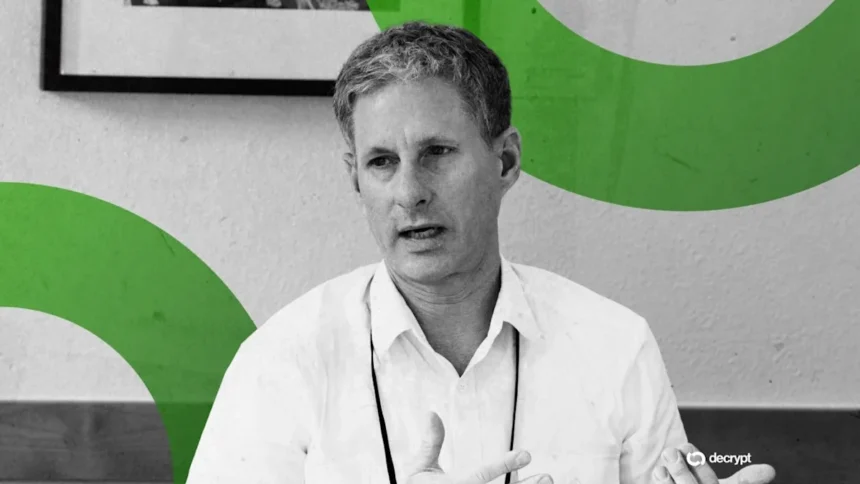
Saikat Chakrabarti, a founding engineer of payment processor Stripe, experienced a setback in his political ambitions as he lost his bid for Congress in California. In the recent all-party race for California’s 11th Congressional District, Scott Wiener, backed significantly by Ripple co-founder Chris Larsen, secured a spot in the upcoming runoff. According to reports, with 50% of the votes tallied, Wiener advanced alongside Connie Chan, while Chakrabarti garnered only 15% of the votes.
Chakrabarti aimed to disrupt the traditional Democratic landscape, positioning himself as a progressive candidate with proposals that included a ban on congressional stock trading and a critique of “tech oligarchs and crypto billionaires” who he believes undermine the party’s agenda. His campaign focused on reimagining the political environment, particularly in light of the growing influence of the cryptocurrency sector.
The election results underscore the emerging power wielded by the crypto industry within political circles, often leading to outcomes that favor candidates with substantial financial backing. Recently, a pro-crypto political action committee (PAC) named Fairshake claimed success, highlighting that six congressional candidates, supported by over $20 million from the crypto sector, won their respective primaries.
Chakrabarti’s campaign faced significant opposition from Abundant Future, another PAC that spent approximately $65,200 against him. Federal Election Commission records revealed that Chris Larsen was the largest individual contributor to Abundant Future, donating $100,000. In addition to his backing of Wiener’s campaign with a $7,000 contribution, Larsen’s support extended to bolstering moderate Democratic candidates.
Notably, Y Combinator CEO Garry Tan and former Lightspeed Venture Partners executive Jeremy Liew also contributed to Abundant Future, with donations of $25,000 and $20,000 respectively. Their firms have shown substantial investment in blockchain technology and crypto exchanges, indicating a strategic alliance between the crypto industry and established political entities.
In the broader context, Larsen has been active in political contributions, donating an impressive $11 million worth of XRP to a Democrat-affiliated PAC in support of Vice President Kamala Harris during the 2024 election cycle. His contributions sparked criticism from some within the crypto community who were puzzled by his support for mainstream candidates.
Chakrabarti, who previously served as chief of staff to Rep. Alexandria Ocasio-Cortez, expressed support for central bank digital currencies (CBDCs), arguing that they could provide critical economic relief during crises. This stance, however, raises concerns among some conservatives regarding financial oversight and surveillance, particularly in contrast to stablecoins, which are typically issued by private entities rather than governments.
Financially, Chakrabarti invested nearly $10 million into his own campaign as he sought to establish a foothold in the political arena. As the election landscape evolves, questions remain about the long-term implications of crypto financing on U.S. politics and which candidates may emerge as future leaders in a rapidly changing environment. The fallout from this election cycle will likely reverberate through both the tech and political worlds as stakeholders reassess their strategies and alliances.