Three years ago, Coinbase faced significant legal challenges when the Securities and Exchange Commission (SEC) filed a lawsuit against the company. On June 6, 2023, the SEC accused Coinbase of operating as an unregistered national securities exchange, broker, and clearing agency, while also scrutinizing its staking offerings. This lawsuit had the potential to upend the company’s business model and future.
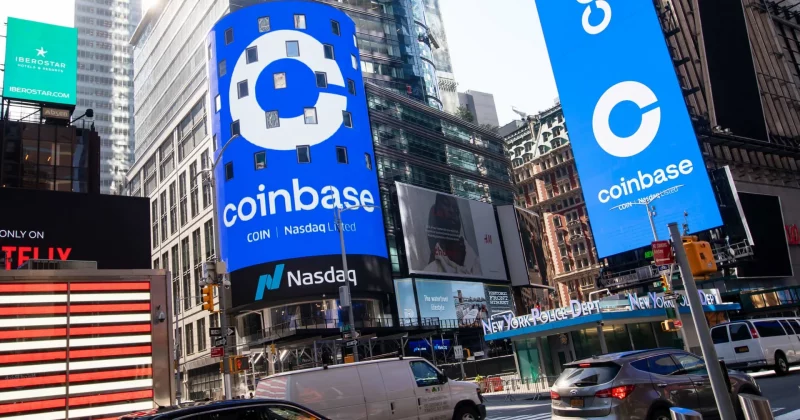
However, the landscape has dramatically shifted since then. Today, Coinbase finds itself celebrating a major achievement—its inclusion in the S&P 500. On May 19, 2025, following an announcement on May 12, Coinbase officially joined the prestigious index, replacing Discover Financial Services as it was being acquired by Capital One. This landmark event made Coinbase the first crypto-native company to penetrate the S&P 500, which serves as a benchmark for trillions of dollars in passive investments. The inclusion means that a broad array of index funds, exchange-traded funds (ETFs), and retirement accounts are now holding COIN shares, whether investors actively choose to do so or not.
The news sent COIN shares soaring approximately 24% on the day the announcement was made. In June 2025, Coinbase emerged as the top-performing constituent of the S&P 500, outpacing all other companies in the index. CEO Brian Armstrong articulated the significance of this milestone, suggesting that it reflects a growing acceptance of digital assets in the mainstream financial landscape.
Reflecting on the transformative legal battle, the SEC’s case against Coinbase posed fundamental questions about its business operations. The regulatory agency focused on Coinbase’s operational capacity as an exchange and broker, asserting that it was conducting business without the requisite registration. It also challenged the legality of its staking-as-a-service offerings. When the SEC ultimately dismissed the case voluntarily in February 2025, Coinbase estimated a potential savings of over $50 million annually in legal costs, a financial relief that could fuel further growth.
Despite this dismissal, Coinbase remains under scrutiny, as Chief Legal Officer Paul Grewal pointed out an ongoing SEC investigation, which he characterized as a remnant from the previous administration. This characterization suggests that Coinbase perceives the ongoing inquiry more as a legacy concern rather than an immediate threat to its operations.
The implications of Coinbase’s S&P 500 inclusion extend beyond the company itself, affecting a wide section of crypto investors. The passive index funds that track the S&P 500 must now include COIN shares to accurately mirror the index. As a result, every 401(k) account linked to an S&P 500 index fund now has involuntary exposure to cryptocurrencies, a development that many investors might not even be aware of.
Moreover, the anticipated $50 million in annual legal cost savings provides Coinbase with an opportunity to channel resources into product expansion, international growth initiatives, or improving margins. As Coinbase adapts and evolves, the intersection between cryptocurrency and traditional finance continues to take shape, reflecting a broader acceptance of digital assets in the financial ecosystem.