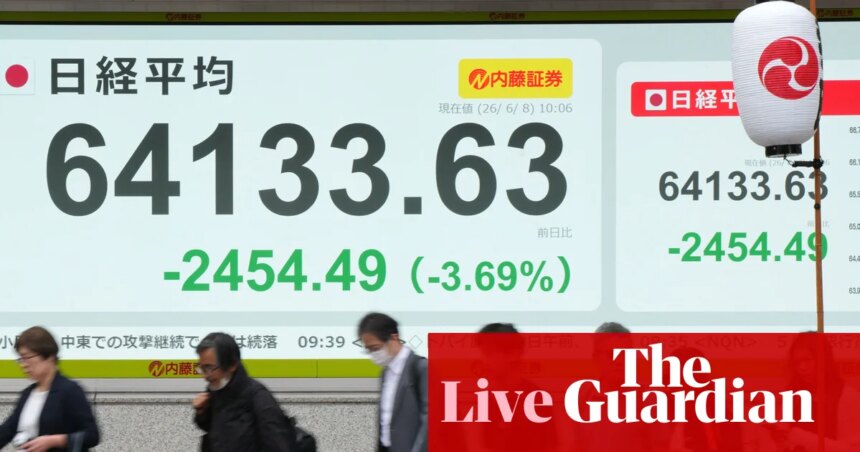
Markets across the Asia-Pacific region are experiencing a significant downturn as investors express concerns over a combination of geopolitical tensions, economic indicators, and a slowing technology sector. The sell-off comes on the heels of a tumultuous trading session on Wall Street, where the S&P 500 fell by 2.64% due, in part, to a stronger-than-expected US employment report. This report has fueled speculation regarding an impending increase in US interest rates, further unsettling market participants.
In South Korea, the KOSPI index plummeted nearly 9% at one point, prompting a temporary halt in trading. Japan’s Nikkei 225 index is also feeling the pressure, having declined by 3.8%. Market analyst Kyle Rodda noted that rising geopolitical tensions, particularly following Iran’s missile strikes on Israel, are heightening fears of an escalation of conflict in the Middle East. With peace negotiations between the US and Iran appearing stagnant, financial markets are understandably on edge.
European markets are not faring much better, with the Stoxx 600 index hitting a two-week low. The fall in AI-related stocks has compounded the market’s troubles. Charu Chanana, a chief investment strategist, pointed to several key factors driving the decline in this sector. First, there is a phenomenon of crowded positioning, where a handful of AI stocks have been the primary focus of investors. This leads to greater volatility when even small negative news arises. Secondly, investor expectations for growth and performance have soared to such heights that any misstep or lack of significant surprises can trigger a swift sell-off.
Additionally, the funding landscape for AI development is becoming increasingly scrutinized. As companies like Alphabet and Meta adjust their financial strategies, fears are emerging about the sustainability of high capital requirements for AI projects. Geopolitical uncertainties, particularly in the Middle East and potential oil market volatility, are adding further pressure on an already shaky market.
In corporate news, Tate & Lyle has agreed to a £2.7 billion takeover deal with US rival Ingredion, driving its shares up by 12%. The acquisition is seen as a strategic move amid ongoing challenges for Tate & Lyle in a changing consumer landscape increasingly shifting towards health-conscious alternatives.
Meanwhile, in Asia, major chipmakers have been at the forefront of the market decline. Samsung Electronics and SK Hynix witnessed sharp losses, prompting the activation of trading circuit breakers in South Korea. The broader implications of the AI market’s volatility have raised concerns about the strength and sustainability of growth in the semiconductor sector, which has been buoyed by the surging demand for AI technologies.
In Britain, the jobs market appears to be cooling, with a decrease in permanent job placements, highlighting broader economic concerns. German manufacturing orders also fell more sharply than expected, indicating potential struggles for Europe’s largest economy amid rising costs linked to global conflicts.
As investors evaluate their positions, the overall sentiment remains cautious. The combination of high expectations in the tech sector, geopolitical uncertainties, and macroeconomic pressures is creating a challenging environment for markets, raising questions about potential recovery in the near term.