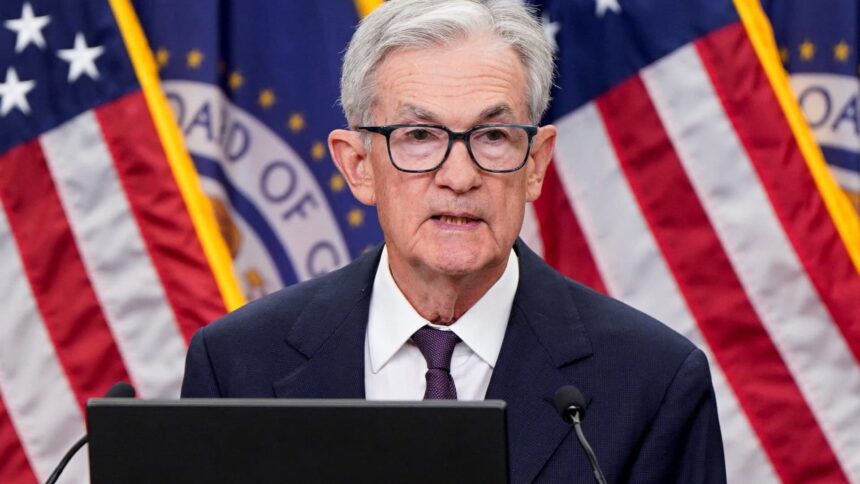
Federal Reserve Chair Jerome Powell recently acknowledged that stock equities appear to be “fairly highly valued.” However, historical trends indicate that similar warnings from Powell and previous Federal Reserve Chairs, including Alan Greenspan, Ben Bernanke, and Janet Yellen, have not significantly hindered stock market growth in the past.
JPMorgan strategist Fabio Bassi examined the S&P 500 returns following warnings from these Fed leaders and found that, on average, the index returned 8.5% to investors over the subsequent six months, with returns nearly doubling to 13% in the year following such announcements. Notably, a significant uptick of 27.2% occurred one year after Greenspan’s December 1996 proclamation regarding “irrational exuberance.” Similarly, the S&P 500 registered a 22.6% return in the 12 months following Powell’s high valuation comments in December 2020.
Bassi pointed out that these remarks were typically made during periods characterized by accommodative monetary policy. Notably, the Federal Reserve had lowered its benchmark interest rate shortly before Powell’s latest comments on equity valuations.
Amid discussions of current market dynamics, some investors are drawing comparisons between today’s conditions and the late 1990s dot-com bubble. However, Bassi highlighted essential differences between then and now. He noted that while the dot-com bubble was fueled by overly optimistic earnings projections lacking fundamental backing, current growth stocks are showing robust double-digit organic growth and solid sales that support their valuations. Furthermore, many companies in today’s market are operating in an oligopolistic environment with profit margins around 25%, returning some of these profits to shareholders through stock buybacks.
Nevertheless, the enthusiasm surrounding artificial intelligence (AI) stocks, which has propelled the S&P 500 to record highs, saw a slowdown last week. Traders expressed skepticism about the sustainability of this trend and raised concerns about the industry’s dynamics. Despite these challenges, investors have maintained a strong propensity to buy on dips, propping up both the market and the AI sector.