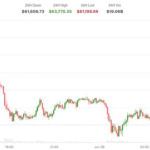
Silver prices (XAG/USD) have continued their downward trend, sinking to approximately $66.50 during the late Asian trading session on Monday. This marks a significant decline to levels not seen in over two months. The white metal is facing strong selling pressure influenced by a surge in hawkish sentiment regarding the Federal Reserve’s (Fed) monetary policy. This shift is largely driven by unexpectedly positive Nonfarm Payrolls (NFP) data from the United States for the month of May. Additionally, ongoing high inflationary pressures have led to increased US Treasury yields, further dampening the appeal of non-yielding assets like silver.
The CME FedWatch tool now indicates a 73.8% probability that the Fed will implement at least one interest rate hike within the year, a stark rise from last week’s 45.2%. As yields on interest-bearing securities climb, the attractiveness of holding assets like silver, which do not accrue interest, diminishes.
During early European trading, 10-year US Treasury yields reached a fresh two-week high of 4.57%. The US NFP report released on Friday highlighted the creation of 172,000 jobs, surpassing estimates that predicted only 85,000. Furthermore, the previous month’s job growth was revised upward from 115,000 to 179,000, painting a more robust picture of the US labor market.
Compounding these issues, high inflation in the US has been exacerbated by ongoing energy crises, causing prices to remain elevated. Concerns surrounding potential escalations of conflict in the Middle East, particularly following recent exchanges of attacks between Israel and Iran, have also intensified fears of further accelerating inflation.
Investors are now turning their attention to the upcoming Consumer Price Index (CPI) data for May, set to be released on Wednesday. The US headline CPI is anticipated to rise to 4.2% Year-on-Year (YoY), an increase from April’s figure of 3.8%.
From a technical analysis standpoint, silver is trading near $66.50, well below the 20-day exponential moving average (EMA) of $74.44, which maintains a bearish sentiment in the near term. The Relative Strength Index (RSI) has dipped to 33.62, suggesting that while there is significant downside pressure, selling momentum may be slowing. On the upside, reclaiming the 20-day EMA would be crucial for bulls aiming to reverse the current bearish trend and secure a stronger recovery.
Conversely, on the downside, silver prices are nearing a six-month low of $61.01. A breach below this level could target further declines towards the $60.00 mark.
Silver remains a precious metal that attracts investors for its historical value and as an asset class to enhance portfolio diversity. Though less sought after than gold, silver’s intrinsic worth and potential role as a hedge during inflationary periods make it an important investment option. The dynamics determining silver prices encompass a range of factors, including geopolitical tensions, economic performances in major markets, and shifts in US interest rates.
Industrial demand for silver, particularly in electronics and solar energy, also influences pricing. The asset’s performance tends to align closely with that of gold, which is seen as a safe-haven asset. Factors such as the Gold/Silver ratio play a critical role in assessing relative valuations between the two precious metals, guiding investment strategies based on market movements.