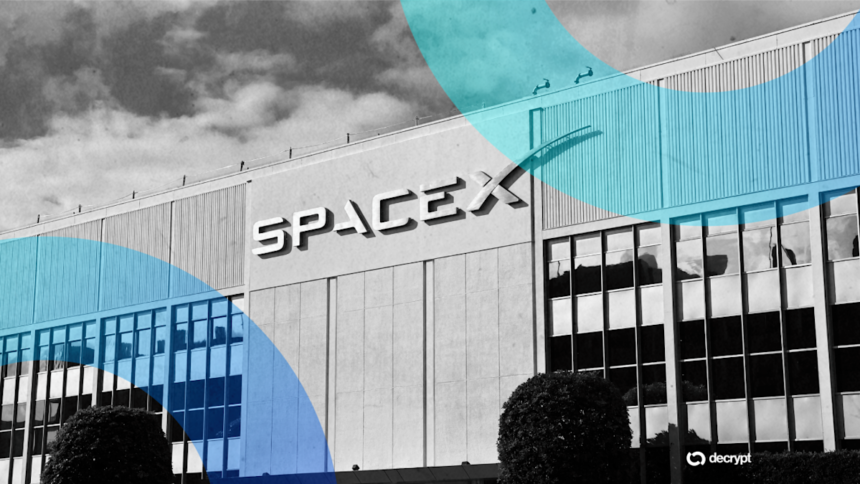
The initial public offering (IPO) for Elon Musk’s SpaceX is creating significant ripples in both the equity and cryptocurrency markets. Scheduled for launch on Friday, this IPO is poised to be the largest in U.S. history, aiming to raise an astounding $75 billion. As a result, it presents a pivotal moment not only for traditional investments but also serves as a test for liquidity within the crypto space.
On the trading platform Hyperliquid, perpetual contracts linked to SpaceX (designated SPCX) are witnessing remarkable engagement, with over $240 million in open interest and $220 million in 24-hour trading volume. This positions SPCX as the eighth-largest asset by volume on the platform, surpassing most crypto and traditional finance-listed perpetual contracts. Notably, SpaceX’s offerings come with a leverage of 5x, contrasting with the 20x leverage often associated with Solana.
SpaceX plans to issue 555 million shares priced at $135 each, culminating in a valuation of approximately $1.77 trillion. This valuation places the aerospace company as the seventh most valuable entity in the U.S., even overtaking Musk’s electric vehicle manufacturer, Tesla. However, opinions are sharply divided regarding the IPO’s implications for the cryptocurrency markets.
From a bearish perspective, experts like Adam Morgan McCarthy, lead researcher at LO:TECH, suggest that the IPO may create a liquidity drain. McCarthy pointed out that retail and institutional investors have already started shifting funds from riskier assets to secure allocations in SpaceX stock. This migration of capital is likely to continue exerting pressure on crypto markets as trading nears. He warned that the true impact would be revealed once trading commences, as it remains to be seen whether the potential sell-off had already been accounted for.
Additionally, McCarthy indicated that crypto and AI are now vying for the same investment capital. With the recent merger between xAI and SpaceX, a greater portion of available funds is diverting toward SpaceX, particularly at a time when crypto volumes are on the decline. “This IPO is unlikely to be the catalyst that turns Bitcoin around,” he noted, emphasizing that it might further diminish crypto interest.
Illia Otychenko, lead analyst at CEX.IO, echoed McCarthy’s concerns, viewing the current scenario as a temporary liquidity drain. The overwhelming demand for the IPO—reportedly five times oversubscribed—has likely captivated funds that could have otherwise flowed into cryptocurrencies.
On the bullish side, the IPO’s structure may stimulate retail investor participation, with allocations starting at just $2,000 and up to 30% of shares set aside for retail buyers. Otychenko pointed out that if the stock experiences a robust opening, this could generate a wealth effect, encouraging retail traders to subsequently invest in cryptocurrencies. He suggested that the stock would need to increase substantially on its first day—ideally by 25-30%—for this wealth effect to be meaningful.
Despite the dual narratives, neither McCarthy nor Otychenko believes that SpaceX will singularly dictate the trajectory of the crypto market. Factors like macroeconomic trends and geopolitical events continue to influence Bitcoin far more significantly. Otychenko highlighted that the ongoing excitement surrounding AI has already siphoned attention away from crypto assets, with the SpaceX IPO likely extending that trend.
Looking ahead, the market’s focus is trained on the opening bell of the IPO, a moment that will clarify whether SpaceX serves merely as a competitor to crypto capital or acts as an eventual catalyst for change in the investment landscape. Until then, the ongoing exodus toward Bitcoin ETFs persists. Current data indicates that Bitcoin remains relatively stable, fluctuating between $61,000 and $64,000, while prediction markets indicate a bearish outlook on Bitcoin’s near-term potential.