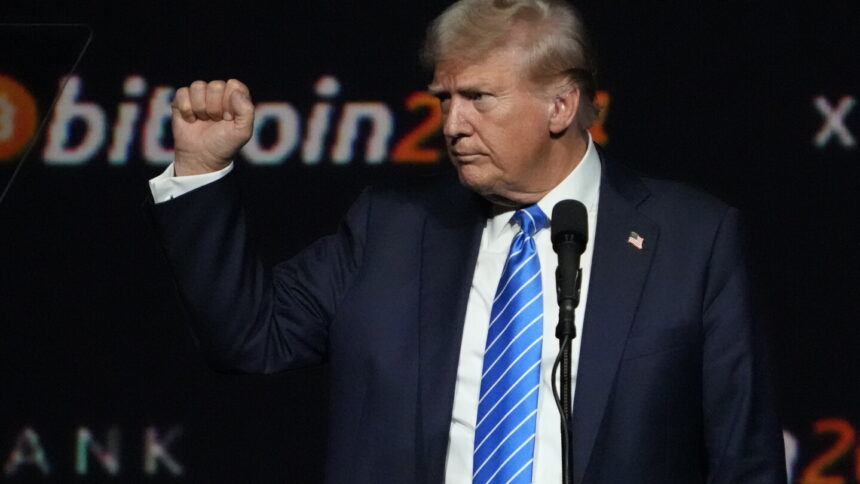
President Donald Trump’s family-controlled cryptocurrency venture, World Liberty Financial, is set to receive regulatory approval to operate similarly to a bank. This anticipated decision from the Office of the Comptroller of the Currency (OCC) could open new financial avenues for businesses and individuals to transact directly with the Trump family.
World Liberty Financial, co-founded by Trump and his three sons, submitted an application for a national trust bank charter on January 5. Reports indicate that Jonathan Gould, the OCC head appointed by Trump, is likely to make a favorable announcement regarding the charter soon. Sources within the banking regulator suggest that the approval is almost guaranteed, with comments from insiders labeling any potential denial as “inconceivable.” Since assuming his post, Gould has issued approvals to several cryptocurrency firms and has adjusted the criteria for bank charters to be more accommodating to the crypto industry.
Critics, including good-government advocates and Democratic lawmakers, are raising alarms about the unprecedented conflict of interest this approval could create. They argue that allowing a president’s family business to have the backing of federal regulatory authority poses ethical and financial risks.
Acquiring a national bank charter would afford World Liberty Financial numerous legal and financial benefits. For instance, the company would be permitted to process financial transactions akin to popular payment platforms like Venmo or PayPal. This newfound capability could enable the Trump family to earn revenue from a share of these transactions. Moreover, the bank charter would permit World Liberty Financial to issue its stablecoin tokens, known as “USD1,” directly within the U.S. while bypassing intermediary institutions. Such a status would also allow the company to circumvent state regulations on liquidity requirements, which typically ensure banking stability.
Corey Frayer, a consumer advocacy expert and former Senate aide, expressed grave concerns over the implications of this development, stating, “For the first time in history, a president is leaning on a bank regulator to give his private enterprise the implicit backing of the federal government.” In response to inquiries, White House and OCC representatives have declined to comment, whereas World Liberty Financial has refuted conflict of interest claims, asserting that its leadership does not engage in government roles and emphasizing regulatory oversight that would accompany the charter.
Should the OCC greenlight the charter, World Liberty Financial would be required to comply with stringent regulations—from maintaining transparency with bank examiners to adhering to anti-money laundering laws. Officials within the company stated that Trump has not been involved with the firm since his inauguration, emphasizing a separation between the business and his presidential responsibilities.
World Liberty Financial’s structure reveals a significant financial entanglement with Trump himself. The company structure allows Trump to maintain a 70% ownership stake in a limited liability company that owns a major share of World Liberty Financial, further complicating the narrative around potential conflicts of interest.
The financial impact of World Liberty Financial has rapidly escalated. Reports indicate that Trump reported earning $57 million from the company in June 2025 for the preceding year, with projections suggesting these earnings may have surged into the hundreds of millions since then. Both Trump Jr. and Eric Trump are also named as co-founders, alongside Barron Trump. The venture has already faced scrutiny, particularly concerning its ties to controversial figures and entities, such as the pardoned Binance founder Changpeng Zhao and a significant investment from an Emirati-backed firm days before Trump’s presidential inauguration.
Critics like Senator Elizabeth Warren warn that the platform’s operations, including those linked to problematic exchanges, pose potential national security risks. While the firm may not be authorized to take deposits or receive federal insurance, the ability to issue stablecoins to the American public could significantly enhance its operating capital.
The regulatory landscape for cryptocurrency is expected to evolve further with Gould at the OCC. He has previously voiced the importance of fostering innovation within the financial sector while also acknowledging the political pressures surrounding the approval of World Liberty Financial’s charter. Proponents of the move argue that increased innovation can enhance financial transactions, but skepticism remains over the implications of integrating such a venture with the Trump family legacy.