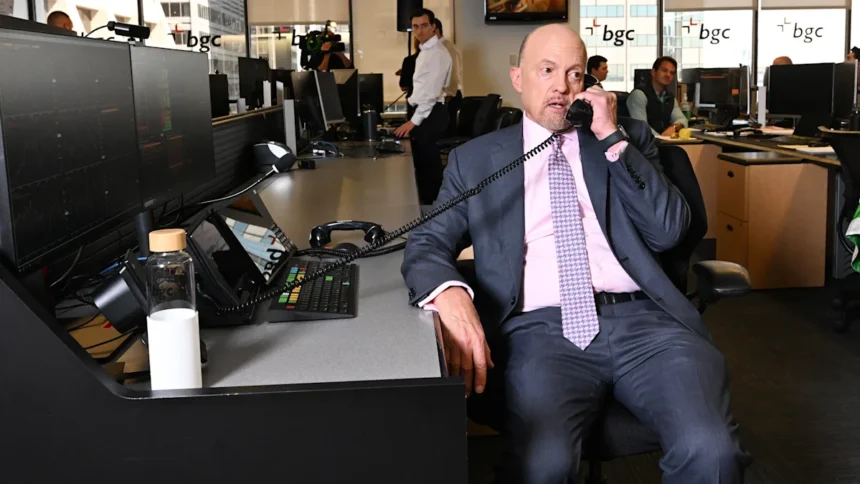
On a recent episode of “Mad Money,” Jim Cramer expressed a notably bearish sentiment regarding the stock market, suggesting that conditions for investors are deteriorating. Cramer emphasized the urgency of the situation, noting, “There’s a shroud over this market and you ignore it at your own peril.”
Cramer’s concerns stem from various factors affecting the market, particularly the recent employment data released by the Bureau of Labor Statistics. Contrary to expectations, the report revealed that total nonfarm payroll employment increased by 172,000 in May. Moreover, while the unemployment rate remains relatively high at 4.3%, it did not increase from the previous month, which Cramer described as a positive sign.
However, this optimism regarding employment is tempered by implications for the stock market. Cramer pointed out that robust employment figures make it less likely for the Federal Reserve to implement interest rate cuts this year. He noted that inflation also plays a critical role, having registered at 4.2% for May, the highest level in three years and significantly above the Fed’s 2% target. In light of this data, Cramer anticipated that Kevin Warsh, newly nominated as the Chair of the Federal Reserve, would maintain current interest rates rather than lower them during the June meeting. He even suggested that a rate hike might soon be necessary to cool down an overheating economy.
Cramer is not alone in his views. Current projections indicate a 60.7% probability of a rate hike in October, according to CME Group’s FedWatch Tool.
Additionally, Cramer expressed concern about the recent trends in Big Tech stocks. He pointed specifically to Apple, which saw its shares fall approximately 7% following a less-than-stellar reception of its AI announcements during the 2026 Worldwide Developers Conference. Similarly, he cited Alphabet’s substantial $80 billion equity raise for AI data centers as a potential warning signal. Cramer warned that if more tech giants follow suit with similar equity transactions, it could siphon off market liquidity needed to support stock prices.
For investors thinking about entering the market, Cramer urged caution. “I am not that bullish,” he said, advising those interested in getting back into the market to wait for a more opportune moment.
These cautious sentiments come against a backdrop of rising market confidence, with the S&P 500 having gained over 9.5% this year, albeit with some volatility. Earlier this month, the index experienced a near 3% drop, marking its worst single-day performance since October 2025, while the CBOE Volatility Index surged about 40%, signaling heightened market anxiety regarding persistent inflation.
As investors navigate these turbulent waters, strategies for diversifying portfolios are advisable. Historical data supports the notion of investing in inflation-resistant assets, including gold, which has traditionally performed well during inflationary periods. Options such as opening a gold IRA can facilitate investments in physical precious metals while providing tax advantages.
Real estate also emerges as a potentially solid hedge against stock market downturns. Investment platforms are making real estate more accessible, allowing individuals to purchase shares in properties without the challenges of direct ownership. With low correlations to stock market fluctuations, real estate can provide stability.
Moreover, ultra-wealthy investors typically diversify beyond conventional assets. Alternative investments, such as contemporary art, have demonstrated resilience against market volatility, offering a route to mitigate risk. Platforms like Masterworks allow individuals to invest in fractional shares of high-value artworks, amplifying market access.
In sum, with a cautious outlook from influential market figures like Cramer and rising economic pressures, investors are encouraged to consider various strategies to manage risk and prepare for potential challenges in the months ahead.