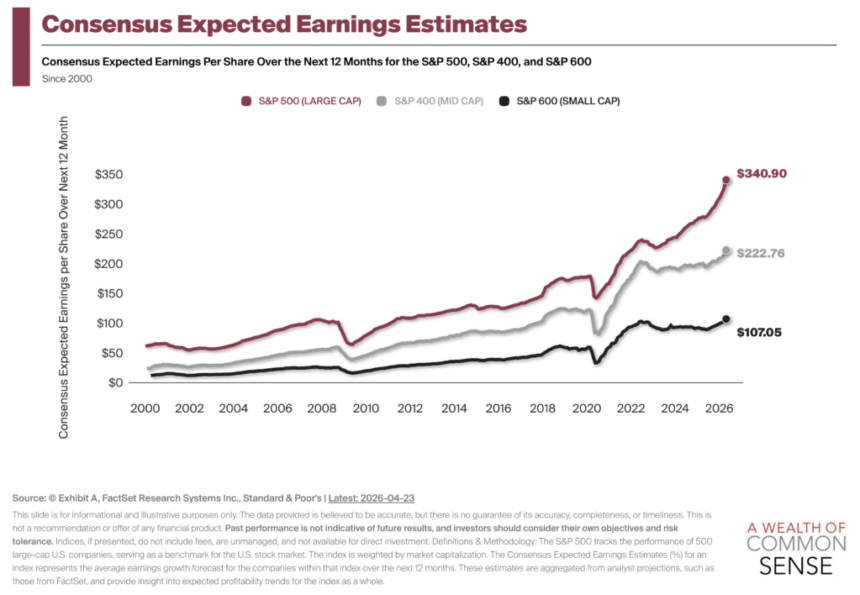
Surprising stability in the stock market amid escalating geopolitical tensions and rising oil prices has raised questions among investors and analysts alike. Despite a significant military conflict in the Middle East causing oil prices to spike by 60% and gas prices soaring over $4 a gallon, the S&P 500 index managed to stay relatively resilient, experiencing only a 9% decline from its highs. This performance has led many to ponder why there were no dramatic sell-offs or significant single-day drops, such as a 2% downturn.
The New York Times recently addressed these concerns, with a corresponding sentiment echoed by many market participants. Investors are grappling with the reality of a stock market that seems disconnected from prevailing geopolitical conditions and worries about energy supply disruptions. Given the chaos in the global energy markets and unresolved tensions in regions like Iran, questions abound regarding how the market could rebound so quickly to previously set all-time highs.
At the core of this resilience is the robust earnings growth expected from major companies. Recent data illustrates a strong correlation between stock market returns and year-over-year forward earnings growth. Notably, earnings expectations have seen an upswing, even as stock prices experienced minor corrections. Detailed metrics show that while prices corrected, valuations were hit hard, reflecting an improved fundamental outlook moving forward.
Market dynamics are undeniably complex, influenced by numerous interrelated variables, including economic indicators, investor sentiment, and broader geopolitical events. Still, the persistent strength in earnings expectations remains a significant factor contributing to the current market’s logical foundation, even in an environment fraught with uncertainty.
Ultimately, the stock market operates independently, at times seemingly oblivious to real-world turmoil. Investors are reminded that the market is an impersonal entity driven primarily by profit motives. It can appear irrational, leaving many scratching their heads in confusion.
This attention to the short-term nature of market movements raises further questions. Could the optimistic earnings estimates be overly optimistic in light of ongoing turmoil? As energy markets potentially face long-term repercussions from current events, the risk remains.
Despite these important considerations, there are indications that certain factors, such as advancements in artificial intelligence, may currently hold more sway over market sentiment than geopolitical issues.
Investors are acutely aware that the market does not always align perfectly with fundamental realities. It operates in a realm where prices can diverge from underlying economic conditions. While there are no guarantees in financial markets, historical patterns suggest that the stock market tends to be more accurate in forecasting future conditions than the predictions made by various analysts and commentators.
The recent bounce back witnessed in April 2020, during a particularly bleak phase of the pandemic, serves as a historical example of this phenomenon. Many dismissed the signs of recovery at the time, only to find the market had anticipated a turnaround. Similarly, during a period of high inflation, when recession fears loomed, the stock market once again proved its capability to be forward-looking.
A piece from Duality Research eloquently encapsulates the disconcerting nature of stock market behavior, noting that its primary role is to elicit confusion and disbelief among investors. While the market is not infallible, it often proves to be a more reliable indicator than those attempting to predict its trajectory.
As discussions around market dynamics and earnings expectations continue, investors remain vigilant, weighing the implications of current geopolitical developments while considering how future circumstances might shape the market landscape.