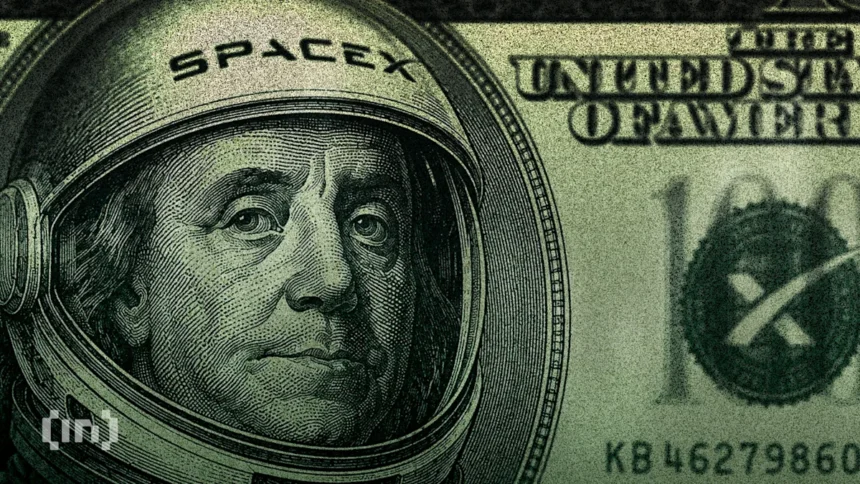
Philippe Laffont, founder of Coatue Management, is shifting his focus away from Bitcoin, arguing that investments in artificial intelligence (AI) and space now present more promising opportunities. During a recent interview with CNBC, Laffont expressed uncertainty about Bitcoin’s future, suggesting that identifying a company that could become a $10 trillion entity seems more feasible than gauging Bitcoin’s trajectory.
Laffont’s background in the finance world adds weight to his views. He established Coatue Management in 1999 after working under the legendary investor Julian Robertson at Tiger Management. This pedigree underscores his cautious stance on Bitcoin, which he claims has been influenced by changing market dynamics. He pointed out that the once limited number of initial public offerings (IPOs) increasingly funneled speculative investment into Bitcoin. However, with new listings and a burgeoning stablecoin payment landscape, alternatives for risk-taking are emerging.
Currently, Bitcoin trades around $60,000, significantly below its record high of nearly $126,000. In contrast, valuations in AI and space industries are on the rise. In his remarks, Laffont expressed his bewilderment, saying, “I don’t know what to think about Bitcoin anymore.”
Laffont outlined a straightforward assessment regarding the potential for $10 trillion companies. The total global market value is projected to expand from approximately $120 trillion to $200 trillion. If one company captures 5% of that market, it could be valued at $10 trillion. Current candidates for this are beginning to take shape. Nvidia, a dominant player in the AI sector, is nearing a market cap of $5 trillion, while SpaceX recently marked the largest IPO on record at $1.77 trillion, with its stock price increasing by 19% on its debut. Moreover, privately held firms like Anthropic and OpenAI are valued at $965 billion and $852 billion, respectively, both approaching the total market capitalization of Bitcoin, which hovers around $1.2 trillion.
The timing of Laffont’s comments comes amid ongoing discussions on Wall Street regarding capital allocation. While some investors still see Bitcoin as too small to attract institutional interest, not everyone aligns with Laffont’s cautious stance. BlackRock, for example, the world’s largest asset manager, continues to advocate for a modest Bitcoin allocation as part of a diversified portfolio.
The prevailing question remains whether Bitcoin can maintain its value proposition as capital increasingly flows toward AI and space ventures. For the time being, Laffont appears to prefer directing his investments away from Bitcoin, signaling a notable shift in perspective within the investment community.