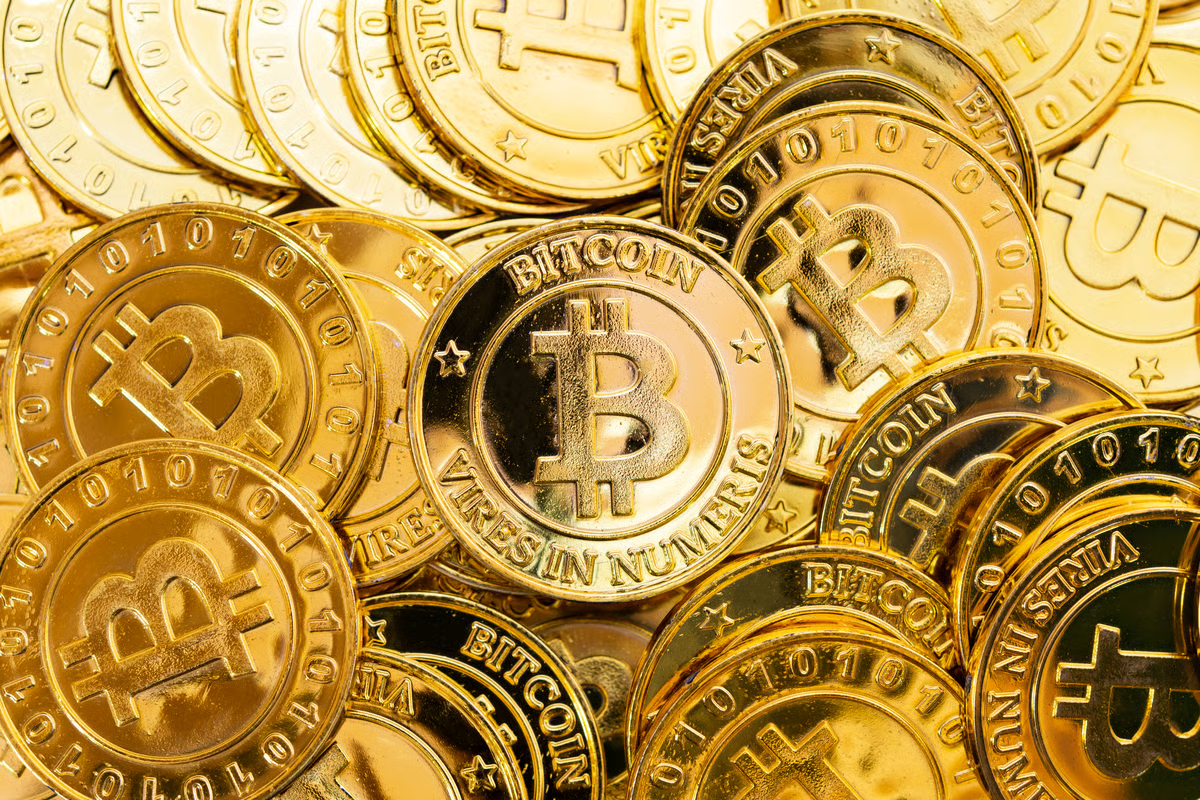
Bitcoin’s recent surge above the $90,000 mark is stirring discussions among investors about the potential for an extended rally for the leading cryptocurrency. After experiencing a notable drop of over 10% since President Donald Trump’s second inauguration, which many initially believed would usher in pro-cryptocurrency legislation, optimism is beginning to resurface. Currently, Bitcoin remains down nearly 30% from the time of Trump’s first term. However, several factors are contributing to a more favorable outlook for Bitcoin.
One of the primary drivers behind this bullish sentiment is the current interest rate environment. With lower interest rates making borrowing less expensive, individuals are finding it easier to secure margin loans. This leverage allows investors to increase their Bitcoin holdings more rapidly, potentially driving up the asset’s price. The Federal Reserve is expected to maintain steady rates into 2026, although this could shift with the appointment of a successor to Fed Chair Jerome Powell, who will complete his term in May 2026. Trump’s advocacy for lower interest rates might influence future Fed policies, possibly paving the way for deeper cuts. Even if that scenario does not materialize, the prevailing low rates, paired with stable inflation around 3%, bode well for Bitcoin’s prospects.
Bitcoin is currently valued at approximately $89,920, having increased by 1.35%. Its market capitalization stands at $1.8 trillion, while trading volume for the day reached $42 billion. The cryptocurrency has fluctuated between a range of $87,315 and $89,005 over the course of the day. Over the past year, the asset has seen a 52-week range between $74,604.47 and $126,079.89.
Another significant factor contributing to Bitcoin’s potential for higher prices is increasing institutional involvement. Initially, retail investors drove Bitcoin’s momentum, particularly during its notable rise in 2017 when prices soared from under $1,000 to nearly $20,000. However, it’s the engagement from institutional players that has significantly bolstered Bitcoin’s ascent to previous all-time highs. With the advent of Bitcoin exchange-traded funds (ETFs) and more investment platforms allowing clients to trade cryptocurrencies, institutions have made Bitcoin more accessible to everyday investors. This dynamic has the potential to generate heightened interest and participation, particularly during periods of market enthusiasm.
Additionally, many perceive Bitcoin as “digital gold,” prompting some governments to begin accumulating Bitcoin reserves. Currently, global governments reportedly hold more than 2% of the total Bitcoin supply, and continued purchases from these entities could solidify Bitcoin’s position above the $90,000 threshold. As governments extend their Bitcoin holdings, demand may rise, encouraging retail investors to accumulate Bitcoin in anticipation of larger governmental bids that could drive prices higher.
This combination of lower interest rates, institutional participation, and governmental interest creates a robust foundation for what many believe could be an extended Bitcoin rally. Should Bitcoin regain its all-time highs, the resulting euphoria among investors may further fuel demand based on perceived scarcity, solidifying its status as both an investment asset and a store of value.