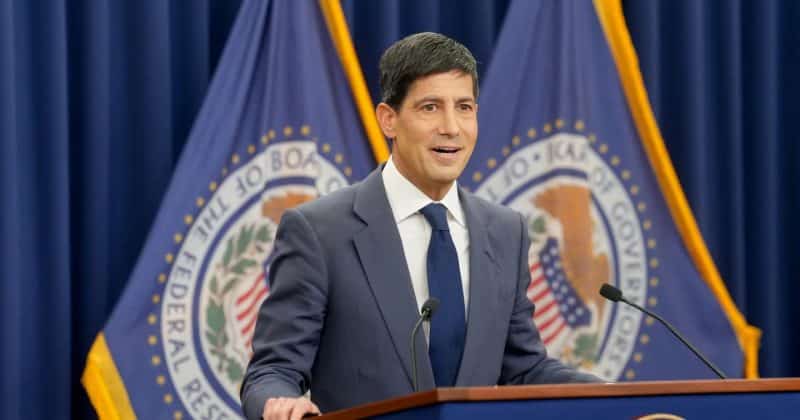
The Federal Reserve’s recent meeting marked Kevin Warsh’s first as Chair, and it set off considerable turbulence in financial markets. In response to the Fed’s updated projections, gold, silver, and Bitcoin experienced notable declines while the dollar strengthened, fueled by rising expectations of interest rate increases before the end of the year.
The June 17 meeting held the federal funds rate steady within the range of 3.50% to 3.75%, a decision that was anticipated by many market analysts. However, the unexpected shift in the Federal Reserve’s projections caught investors off guard. Notably, nine out of nineteen officials now foresee at least one rate hike by the end of 2026. This shift shifted the median year-end rate outlook from 3.4% to 3.8%, emphasizing a collective inclination towards tighter monetary policy.
Cryptocurrency markets were hit hard, particularly Bitcoin, which had been trading around $66,000 prior to the meeting. Following Warsh’s hawkish rhetoric, Bitcoin retreated to a range between $64,800 and $65,300, reflecting a drop of approximately $1,200. While on its own, this decrease may not appear drastic, its rapid pace and the underlying triggers are significant. This volatility underscores how sensitive Bitcoin is to signals from the Federal Reserve. As the dollar strengthens due to expectations of stricter monetary policy, assets like Bitcoin and gold—devoid of yield—tend to suffer. In scenarios where cash earns more interest, the opportunity cost associated with holding non-yielding assets increases.
Gold and silver also followed a similar trend, dipping below critical technical thresholds as the dollar gained strength. This reaction reinforces the established correlation between the Fed’s hawkish stance and price declines across non-yielding assets.
Despite Warsh’s ownership of interests in over 30 crypto assets prior to his appointment, his inaugural meeting established him as a non-traditional figure within the context of cryptocurrency. He has previously described Bitcoin as “the newest, coolest software” with characteristics akin to those of gold as a store of value. However, it is clear that his primary focus lies in controlling inflation and upholding the Fed’s credibility, rather than catering to the preferences of cryptocurrency investors.
In a departure from over a decade of Fed tradition, Warsh chose not to include his individual economic forecasts in the committee’s projections. This decision breaks away from the practices of his predecessors, including Jerome Powell and Janet Yellen, who consistently provided their own forecasts. Warsh’s abstention signifies a potential shift toward data-driven decisions over forward guidance, altering how the Federal Reserve communicates with markets.
The announcement of Warsh’s nomination in January 2026 had already shaken markets, triggering a selling wave in Bitcoin and precious metals as traders predicted a more hawkish approach from the Fed. The recent post-meeting reactions echoed this earlier trend, highlighting the profound impact Warsh has already begun to have on market sentiment.
For investors, the revisions to the rate projections serve as critical indicators to monitor. The updated median year-end rate of 3.8% signifies the Fed’s willingness to tighten monetary policy. For Bitcoin and other non-yielding assets, this sensitivity to rate forecasts complicates the investment landscape. The cryptocurrency’s appeal as a store of value and inflation hedge faces challenges when the Fed signals intentions to combat inflation by raising rates, as such developments divert investment toward yield-generating assets.