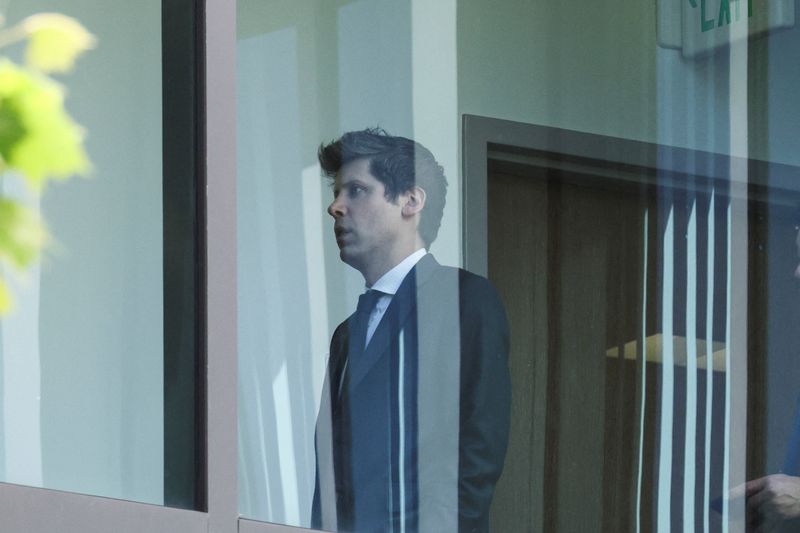
Investing.com reports that OpenAI is contemplating delaying its highly anticipated initial public offering (IPO) until 2027, as indicated in a Thursday report by the New York Times. This information came from three individuals involved with the company’s internal discussions. Initially, OpenAI had aimed for a public launch as early as the third or fourth quarter of this year after filing a confidential S-1 with the SEC.
The potential postponement reveals an internal conflict regarding the optimal timing, overall market conditions, and the ambitious valuation target set by the company. Chief Executive Sam Altman is pushing for a monumental $1 trillion valuation for the creator of ChatGPT. This figure marks a significant increase from the company’s previous private funding round, which valued the business between $730 billion and $852 billion.
The momentum for an OpenAI debut had appeared robust in recent months. The company successfully navigated a major obstacle when a lawsuit from Elon Musk was dismissed, and its key performance metrics indicated explosive growth, with revenue reaching an unprecedented $2 billion per month.
Moreover, the public markets have shown an appetite for large-scale debuts, exemplified by SpaceX, which recently shattered records with a June 2026 IPO that raised over $85 billion and achieved a staggering valuation of $1.77 trillion upon its launch. Many had speculated that SpaceX’s success would pave the way for OpenAI and its rival Anthropic to make simultaneous trillion-dollar listings this year. However, the current halt in OpenAI’s aggressive expansion suggests a shift toward a more cautious and defensive strategy.
Despite impressive revenue growth, OpenAI’s recent disclosures have cast a sobering shadow on its financial picture. Audited financial documents revealed a staggering net loss of $38.5 billion for the previous year, primarily due to a massive $34 billion expenditure on computing power, research and development, and corporate restructuring.
While SpaceX’s IPO represented a historic achievement, its aftermath highlighted the volatility of the market: SpaceX shares dropped from a post-IPO peak of $202 to $153. This downturn, combined with ongoing fluctuations across the tech sector, has led investors to question whether the commercial potential of generative AI can offset the substantial infrastructure costs associated with it.
Advisers to OpenAI have cautioned the company’s executives that retail enthusiasm for an IPO might be tepid given the current market uncertainties. The Times indicates that they presented Altman with two stark options: to wait until 2027 to allow the market to stabilize, thereby giving OpenAI’s financials time to mature into a $1 trillion valuation, or to accept a lower valuation for a quicker IPO by late 2026.
According to a source with direct communication with Altman, the CEO has firmly rejected the notion of compromising on the $1 trillion figure. For now, OpenAI appears prepared to wait through the tempest to ensure its debut aligns with its strategic goals and desired valuation.