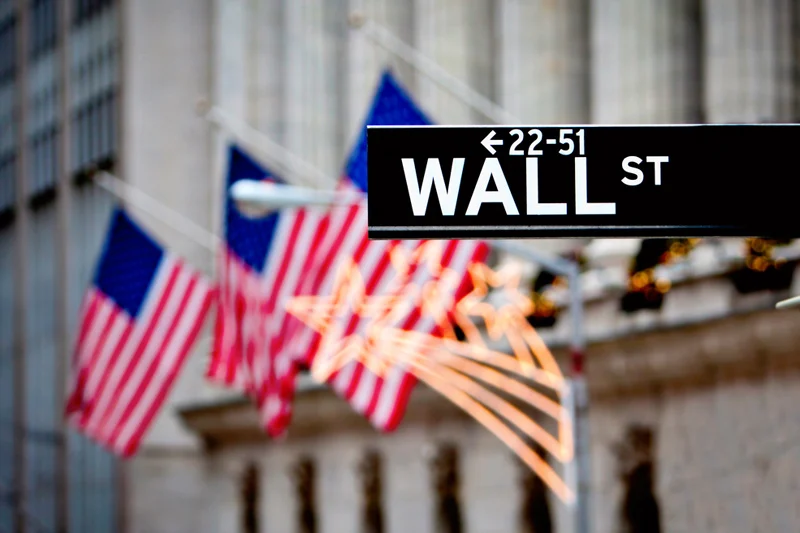
U.S. stock index futures stabilized on Thursday evening as Wall Street braced for weekly losses largely influenced by declines in technology shares. The mixed session on Wall Street saw significant losses in major tech stocks, including Apple, overshadowing a rally in chipmakers following strong earnings from Micron Technology.
Dow Jones Industrial Average futures saw a marginal increase of 0.1%, settling at 29,755.50 points. Similarly, S&P 500 futures also rose by 0.1% to reach 29,742.75 points. The Nasdaq futures nudged upward by 0.17%, now standing at 52,423.0 points.
Concerns surrounding geopolitical stability were heightened as reports emerged of a recent attack on a cargo vessel in the Strait of Hormuz. This development has raised questions about the durability of the fragile U.S.-Iran peace deal. Despite this unrest, oil prices experienced slight gains on Thursday, although they remain at levels seen before the onset of the conflict.
The tech sector has been under considerable pressure this week, with the Nasdaq and S&P 500 poised to lose 4.4% and 1.9%, respectively. Investor sentiment has been buoyed by uncertainty regarding artificial intelligence investment and the implications of rising interest rates. In contrast, the Dow Jones is trading up 0.7% for the week as investors shift their focus towards more defensive sectors, such as healthcare and utilities.
Although tech stocks experienced some recovery on Thursday, especially following a rally prompted by Micron, the overall sentiment was still heavily influenced by notable losses in larger tech companies. Notably, Apple Inc. saw a significant drop of 6.1% after announcing price hikes for its iPads and MacBooks, a move made necessary to address soaring memory chip costs driven by AI demands.
Conversely, Micron Technology Inc. experienced a remarkable surge of nearly 16%, contributing to a 3.6% gain in the semiconductor sector. This divergence underscores a noticeable trend where chipmakers are emerging as key beneficiaries of the current AI landscape, while companies in consumer electronics and software may find themselves bearing the costs.
Moreover, uncertainty surrounding the AI sector was amplified by reports suggesting that OpenAI might delay its initial public offering until 2027, casting further doubt on the pace of technological advancement and investment in this domain.
On the inflation front, the Personal Consumption Expenditures (PCE) price index rose as anticipated in May, with core inflation figures mirroring this trend. Although these readings align with expectations, they indicate persistent inflationary pressures, keeping levels well above the Federal Reserve’s 2% annual target.
Market expectations remain that the Federal Reserve may implement at least one interest rate hike by the end of 2026, reflecting a generally hawkish posture communicated during the central bank’s recent meeting. The resilience observed in the U.S. economy, bolstered by upward revisions to first-quarter data, could provide the Federal Reserve with more latitude to consider additional rate increases.