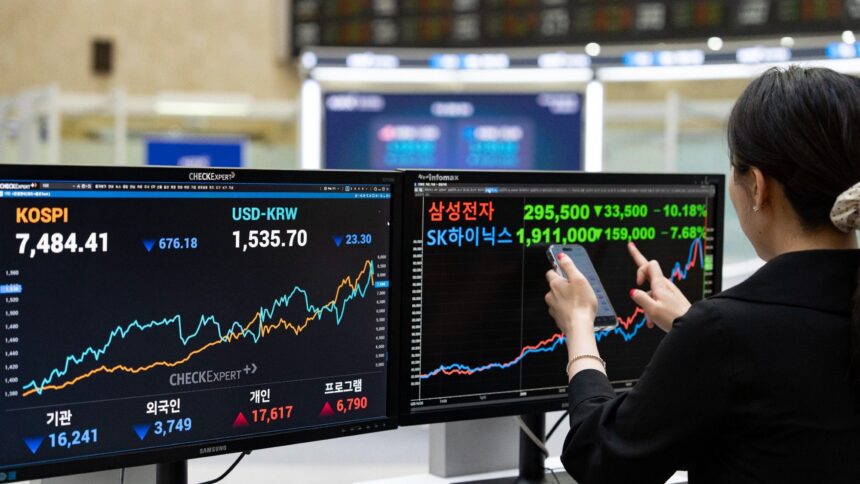
Investors are bracing for significant turbulence in the technology sector, as concerns around higher interest rates, inflated valuations, and the uncertainty of artificial intelligence (AI) spending weigh heavily on the market. The tech-heavy Nasdaq composite index experienced a notable downturn, falling nearly 4% over the past five days. This decline has been largely attributed to sharp losses among semiconductor manufacturers, particularly Sandisk and Micron, which have seen significant gains this year of 727% and 269%, respectively, despite their recent drops of over 13%.
Market analysts like Jack Pitcher have pointed out that the stratospheric rally of tech stocks has left them vulnerable to abrupt reversals. The worry among investors is that the much-anticipated profits from AI investments may not materialize as expected, leading to a rethink of current stock valuations.
Bloomberg referred to this downturn in the chip sector as a “chip-wreck,” particularly driven by declines in South Korea’s chip-centric Kospi index. The sell-off was exacerbated by significant drops in the shares of major firms such as SK Hynix and Samsung, leading to a trading halt triggered by a circuit breaker as panic set in among investors. Lee Chan-jin, South Korea’s top financial regulator, suggested that the sell-off might have been influenced by his approval of new, high-leverage single-stock exchange-traded funds (ETFs) that track chip-makers. These ETFs, which started with $3 billion in assets, have surged to approximately $9.1 billion, with retail investors purchasing a staggering 92% of them. These funds carry high risk due to their leveraging, amplifying any movements in the underlying stocks, yet trading activity remains robust despite cautionary signals.
Amid this roller-coaster environment, a prevailing bullish sentiment appears to be holding sway on Wall Street. Investors are searching for hedging opportunities while remaining committed to their positions. According to Julian Emanuel from Evercore, traders are looking for reasons to protect their investments while staying invested. Lisa Shalett of Morgan Stanley Wealth Management echoed this sentiment, expressing a greater inclination to buy than sell in the current volatile market.
Looking ahead to the summer months, experts predict a turbulent ride as liquidity tends to dry up. Bobby Molavi of Goldman Sachs likened the current market conditions to the final months of the dotcom boom, warning that sudden 5% shifts may soon become commonplace. Concerns loom about potential 10% fluctuations that could destabilize the market further, leaving investors on edge with no clear safety net in sight.