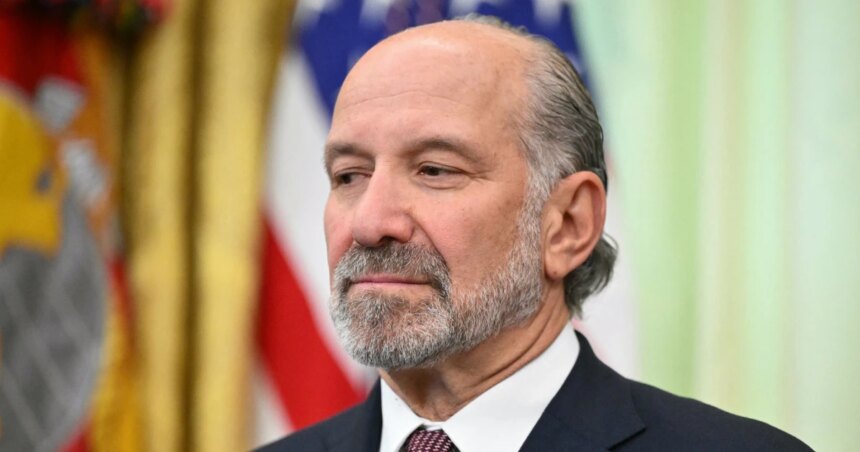
The U.S. government has granted Anthropic the green light to redeploy its advanced Mythos 5 model to a targeted group of customers and partners, as revealed in a letter from Commerce Secretary Howard Lutnick. Sources familiar with the situation confirmed that this limited access will extend to approximately 100 organizations, including governmental bodies and private sector firms, enabling them to leverage the model for defensive cybersecurity purposes.
In the letter, Lutnick expressed confidence in the safety measures Anthropic has implemented, describing them as “guardrails” intended to facilitate the responsible use of the powerful AI system. The Commerce Department had not provided immediate comment on this development.
The restoration of Mythos 5 access follows a period of uncertainty during which Lutnick invoked export control regulations, necessitating the shutdown of both the Mythos 5 and Fable 5 models due to national security concerns. Prior to this restriction, Mythos 5 had been utilized by various trusted organizations involved in Anthropic’s Project Glasswing, a collaboration with entities such as Cisco and JPMorgan Chase. An earlier version of this model demonstrated the ability to identify numerous cyber vulnerabilities, showcasing its potential value in cybersecurity.
Following the recent announcement, Anthropic indicated its ongoing discussions with the government, particularly regarding the reinstatement of Fable 5, which had previously been available to the general public. Unlike Mythos 5, Fable 5 had enhanced guardrails designed to prevent it from addressing sensitive topics related to cyber threats and biological issues, which pose significant risks.
This news comes in the wake of OpenAI’s announcement of a phased release of its latest series of models, the GPT-5.6 family, at the request of the federal government. OpenAI’s CEO, Sam Altman, expressed frustration over the staggered launch approach, which was not in line with the company’s initial plans for an open-access debut. The company noted it had pre-shared a list of trusted partners with the government to facilitate collaboration during this development phase.
Prior to the export control measures, there had been increasing concern among administration officials about the possibility of users bypassing Fable 5’s operational safeguards. These officials were reportedly not confident that Anthropic’s leadership fully grasped the gravity of the national security implications.
Export control regulations enable the U.S. government to restrict access to sensitive technologies, especially given that foreign nationals are employed at Anthropic and many partners that had previously been utilizing its models. As a direct consequence of these concerns, the government ordered the discontinuation of both AI systems.
Responding to the government’s directives, Anthropic sent a team of its top engineers and scientists to Washington, D.C., to collaborate with officials from the Commerce Department and the Office of the National Cyber Director. This effort aims to reinstate public access to the models while simultaneously mitigating any potential cyber risks.
Furthermore, in a proactive measure, an executive order issued by President Trump earlier this year called for bolstering key cyber defenses and establishing a testing framework for advanced AI models to ensure safety. The development of this framework is still in progress.
OpenAI conveyed its concerns about the current temporary safety vetting procedures. In their GPT-5.6 blog post, they articulated that they do not believe such governmental oversight should be the long-term solution, as it could limit access to vital tools for users, developers, and global partners in need of advanced AI capabilities.