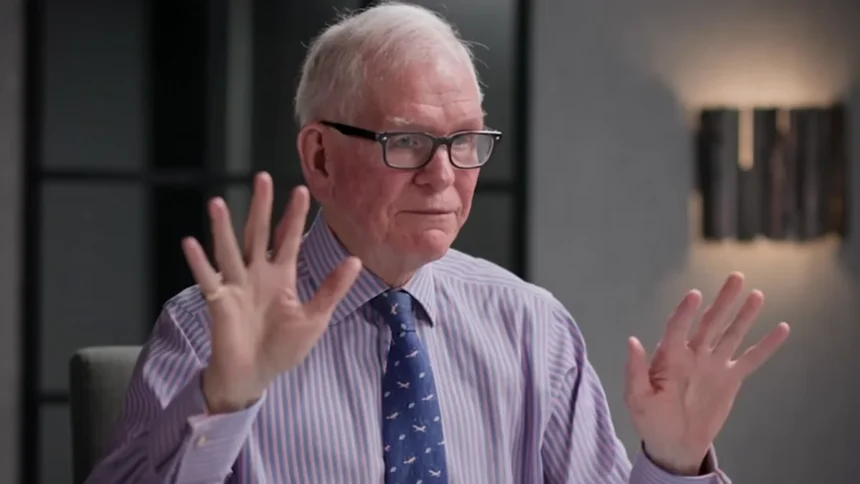
In a recent episode of “The Diary of a CEO” podcast, renowned market analyst Jeremy Grantham made bold predictions regarding the current state of the U.S. stock market, characterizing it as the largest investment bubble in American history. As a co-founder of the asset management firm GMO, Grantham previously foretold of major financial crashes, including the dot-com bubble in 2000 and the housing market collapse in 2008.
Grantham expressed serious concerns about the momentum driving the U.S. stock market, noting that the S&P 500 index has surged over 70% in the past five years, significantly boosted by investor enthusiasm surrounding artificial intelligence and tech stocks. However, he warned that this excitement could lead to disastrous outcomes for investors who pursue these high-flying stocks, stating, “The stocks that have gone up the most — AI and the more exciting stocks with the biggest moves — historically, would be expected to come down the most.”
His advice was clear and unambiguous: “If you have a big position in U.S. technology stocks, my personal advice would be to sell it all.” Grantham did not limit his warning to the tech sector; he extended it to the broader U.S. stock market, asserting, “Don’t own U.S. stocks.” He emphasized the severity of potential declines, referencing the current market as the “most expensive” in American history and drawing parallels to the tech bubble of 2000. He predictably shocked listeners when he estimated that the market could realistically face a decline closer to 70% rather than 50%.
This potential downturn could have far-reaching implications for many American workers, especially those heavily invested in equities through retirement accounts like 401(k)s and IRAs. Grantham’s prediction echoes recent financial analysis revealing that during the market sell-off of 2022, retirement accounts collectively suffered losses estimated around $3 trillion.
Grantham is not alone in expressing concern about the market. Other prominent investors, such as Ray Dalio, founder of Bridgewater Associates, have voiced similar apprehensions, pointing to troubling market conditions reminiscent of bubbles from both 2000 and 1929. The current market volatility underscores the importance of diversification, especially as significant concentrations exist within the largest stocks in the S&P 500.
To mitigate the risks associated with such volatile markets, experts recommend diversifying investments. One compelling option is gold, historically viewed as a safe haven asset. Grantham and Dalio have both emphasized gold’s role in providing stability during turbulent times. Over the past five years, gold’s value has increased significantly, driven by inflation concerns and market uncertainty. Investors can consider gold IRAs to combine the tax benefits of traditional retirement accounts with the protective nature of gold investments.
Real estate offers another avenue to diversify beyond traditional stocks. Unlike equities, high-quality real estate can generate consistent income through rental payments, regardless of market conditions. Platforms like mogul allow investors to purchase fractional ownership in rental properties without the hassles of direct property management.
Furthermore, alternative assets such as contemporary art are also gaining traction among investors. With limited supply and increasing global demand, art investments can serve as a robust hedge against inflation. Platforms like Masterworks enable investors to purchase shares of valuable artworks, making the once exclusive asset class more accessible.
In summary, Grantham’s alarming market predictions prompt a reassessment of traditional investing strategies. As the landscape becomes increasingly uncertain, diving into alternative assets and diversifying portfolios is crucial for investors aiming to safeguard their financial futures.