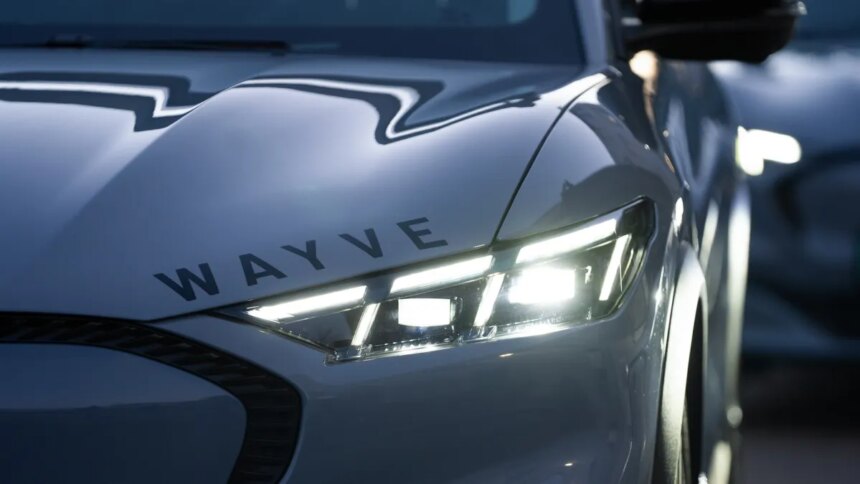
Wayve, a U.K.-based startup specializing in self-driving technology, is enabling its employees to sell a portion of their vested equity through an $85 million tender offer. This structured opportunity allows employees to return shares to existing and new investors, reflecting the company’s current valuation of $8.5 billion.
This valuation was established in February during the company’s successful $1.2 billion Series D funding round, which attracted notable investors such as Eclipse, Balderton, and the SoftBank Vision Fund 2. The investment round also saw participation from high-profile entities including the Ontario Teachers’ Pension Plan, Baillie Gifford, Microsoft, Nvidia, and Uber.
This recent tender offer marks Wayve’s second employee liquidity event; the first occurred alongside the company’s $1.05 billion Series C funding round in May 2024. The trend of offering liquidity to employees is gaining traction among AI startups, aimed at encouraging retention and discouraging employees from jumping to competitors or starting their own ventures immediately after their options vest.
Several other startups have also recently engaged in tender offers, including Decagon, which focuses on AI agents for customer service; ElevenLabs, known for its AI voice-generation technology; Linear, a project-management platform for software teams; and Clay, a marketing automation tool. Notably, Clay has facilitated two such tender offers within the past nine months.
These liquidity offerings are largely possible due to investor enthusiasm for acquiring equity in these rapidly growing companies, often at a premium, as they bet on significant future valuation increases.
Wayve employs a self-learning method for its autonomous driving solutions. Unlike many existing self-driving programs that rely on prebuilt, high-definition maps, Wayve’s technology utilizes an end-to-end neural network, allowing it to learn driving skills from data in a manner akin to human learning through experience.
The company is striving to develop a “general-purpose” AI driver that can operate across various countries, vehicles, and road conditions. In line with this ambition, Wayve has expanded its workforce to 1,200 employees over the past year.
Looking ahead, Wayve is planning pilot launches for its robotaxi service in collaboration with Uber later this year. Additionally, it intends to incorporate its AI technology into Nissan’s upcoming driver-assist systems, with a projected timeline starting in 2027.