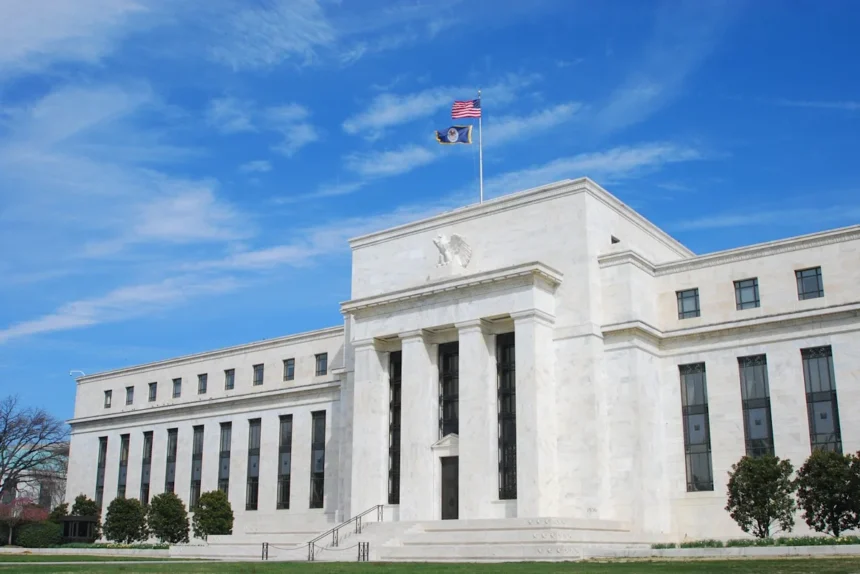
In a pivotal ruling this week, the Supreme Court reaffirmed the Federal Reserve’s unique level of independence from the executive branch, declaring that the president cannot terminate a Fed governor without just cause. This decision has been met with optimism among investors as it reinforces the stability of monetary policy in the United States.
The case arose from President Donald Trump’s attempts in 2021 to dismiss Fed Governor Lisa Cook, based on allegations of mortgage fraud, which she denies. The Justice Department continues to investigate the claims. Observers suggest that the investigation may have been intended to facilitate Cook’s removal and replace her with a governor who would more readily support Trump’s preference for lower interest rates. The Trump administration had also sought to replace former Fed Chair Jerome Powell for similar reasons.
Had the court sided with the notion that a president could dismiss Fed governors without substantiation, it would have set a precedent allowing any president to alter the composition of the Federal Reserve at their discretion. Such a shift could severely undermine the Fed’s independence, which is seen as crucial for maintaining economic stability and preventing political influence over monetary policy.
Economic theory supports the importance of central bank independence, as it fosters conditions conducive to economic growth and stability within financial markets. When consumers trust that the Fed is equipped to manage inflation, they are less likely to act in ways that exacerbate inflationary pressures. Conversely, a lack of confidence can lead to behavior that actually drives prices upward.
Investor sentiment is similarly influenced by inflation expectations. If they believe political pressures will force the Fed to reduce rates when an increase is warranted, they may withdraw from riskier assets, preferring safer havens like gold and silver. This creates a cycle where inflation expectations can become self-fulfilling.
Chief Justice John Roberts highlighted in the ruling that both the reality and appearance of the Fed’s independence are central to its operational design. Various economic studies have indicated a correlation between the degree of independence seen in central banks and the stability of stock prices. For instance, countries with less autonomous central banks often face heightened risks of market downturns, as investors tend to anticipate continued interest rate cuts instead of the necessary hikes to combat inflation.
An illustrative study on Turkey demonstrated the detrimental effects of political interference in central banking, revealing that such actions significantly negatively impacted stock market outcomes. Politicians often lean toward lower interest rates, especially before elections, as these can stimulate consumer spending and create short-term boosts for the economy. However, the long-term health of markets is more reliant on consistent inflation rates and gradual growth driven by core economic fundamentals.
While the Supreme Court’s ruling prevents Trump from unilaterally removing a Fed governor without cause, it is essential to note that the decision was contentious, with a narrow 5-4 majority. Following the ruling, Trump indicated he would seek alternative approaches to remove Cook from her position, leaving the door open for potential future challenges to Fed independence.
For the time being, investors can find reassurance in the enhanced insulation of the Federal Reserve from political influences, which may allow for steadier economic management moving forward.