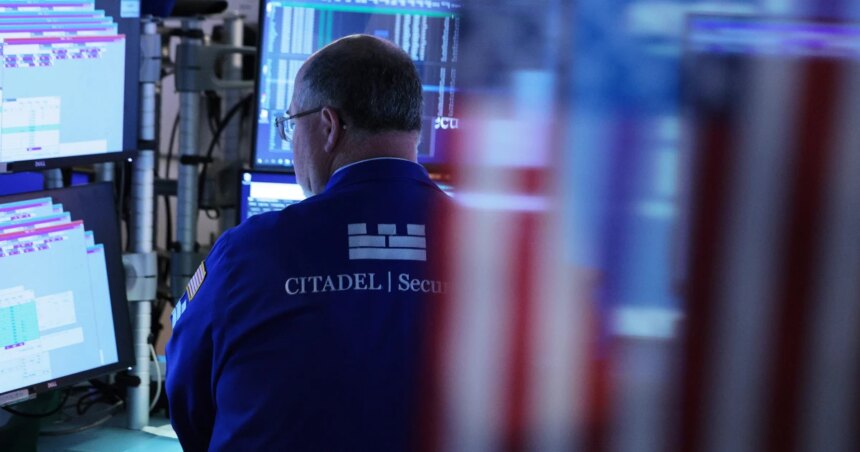
The S&P 500 achieved a new all-time high on Wednesday, marking a significant recovery for the stock index amid ongoing tensions related to the war with Iran and surging energy prices. The benchmark rose by 0.5%, surpassing its previous record of 7,002.28 set on January 28. Since the beginning of the year, U.S. equity markets have experienced considerable volatility. Following the January peak, the S&P 500 saw a steep drop of 9.8%, bottoming out at 6,316.91 on March 30, influenced largely by the conflict with Iran and rising oil prices.
However, in the weeks following that low, the markets have begun to stabilize, adapting to the persistent uncertainties stemming from the war. Ed Yardeni, president of Yardeni Research, stated, “As far as the stock market is concerned, the war is over until further notice.” This suggests a shift in investor sentiment, indicating optimism about the conflict and its implications for economic stability. Yardeni noted that the current market rebound resembles last year’s dramatic rally initiated in early April after former President Trump postponed certain tariffs.
This positive momentum has been particularly evident in the tech sector, with shares of the so-called “Magnificent 7” mega-cap tech stocks—Apple, Microsoft, Alphabet, Amazon, Nvidia, Meta, and Tesla—rising by 14.8% since the S&P’s March low. In contrast, other S&P 500 companies without these major players saw an increase of only 8.1%.
Trump’s handling of the conflict, including multiple extensions of war-related deadlines, a temporary reduction in military actions, and recent diplomatic discussions with Iranian officials, appears to have influenced market sentiment. While there was no definitive agreement reached during these talks, the situation remains in a fragile ceasefire, set to be reassessed next Wednesday.
Traders have shifted their focus to the U.S. economy and signals that may indicate a resolution to the ongoing conflict. The market rally followed Trump’s comments on the Fox Business Network suggesting that the war might be nearing an end, although he cautioned that “we’re not finished” with the war yet.
Despite the stock market’s upward trajectory, concerns linger about the broader economic impact of rising energy costs. The price of U.S. crude oil has escalated nearly 60% this year, while international Brent crude has climbed over 55%. Consequently, gasoline prices surged, averaging $4.10 per gallon nationally as of Wednesday, reflecting a 37% increase since the conflict began. Economists have issued warnings about potential slowdowns in global economic growth, with the International Monetary Fund (IMF) revising its forecast for 2026 to a rate of 3.1%, down from a prior estimate of 3.3%. Additionally, the IMF raised its inflation outlook for 2026 to 4.4% from 4.1%.
Over the last ten trading sessions, the S&P 500 has rallied by 9.8%, a pace described by Deutsche Bank Research’s macro strategist Henry Allen as faster than last year’s rebound following the Liberation Day tariffs and the quickest run of gains since the recovery after the initial COVID-19 lockdowns in April 2020.
However, amidst this rally, experts caution that the markets may be counting their chickens too early. Analysts at ING suggest that while there is increasing optimism surrounding upcoming negotiations between the U.S. and Iran, restraint and caution should be exercised. Reports indicate that face-to-face talks could occur as soon as this week, adding another layer of uncertainty to an already dynamic situation.