Harris County prosecutors have filed a manslaughter charge against a Tesla driver involved in a tragic incident that resulted in the death of a 76-year-old woman in Katy, Texas. The driver, Michael David Butler, 44, is accused of deliberately overriding the vehicle’s Full Self-Driving (FSD) system, accelerating to 73 mph in a residential area where the speed limit is significantly lower.
The incident occurred on June 19, leading to the death of Martha Avila. Butler, who is currently being held on a $150,000 bond, is scheduled to appear in court soon. If convicted, he faces a sentence ranging from two to 20 years in prison, as manslaughter is classified as a second-degree felony in Texas.
Details from the charging document reveal that prior to the crash, Butler had conducted online searches questioning the aggressiveness of Tesla’s FSD capabilities. This aspect has raised questions regarding his intent as prosecutors argue that his research supports the claim that he purposefully pushed the vehicle’s speed beyond the limits set by the FSD technology.
On the day of the crash, Butler was making DoorDash deliveries and had re-engaged the FSD system after completing what he believed to be his last drop-off. According to the complaint, while the car was navigating the neighborhood autonomously, Butler pressed the accelerator as he approached a stop sign, overriding the FSD’s programmed behavior. This override led the vehicle to speed through the intersection without stopping.
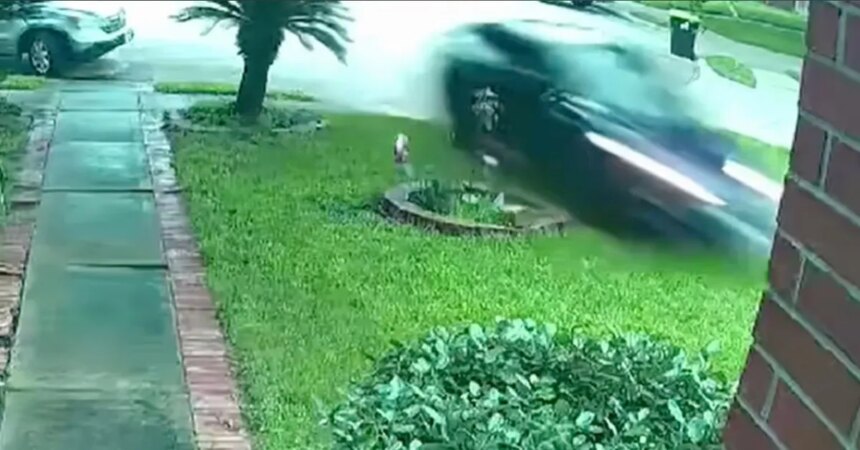
As Butler maneuvered to turn left towards his next delivery location, FSD activated the turn signal and initiated the left turn. Instead of following the turn, Butler pressed down the accelerator again, sending the car into the cul-de-sac at a dangerously high speed. Witness reports and telemetry data indicate that he maintained full acceleration for about six seconds without engaging the brakes during the critical moments leading up to the crash, resulting in the vehicle leaving the ground and crashing into Avila’s home.
Investigators have ruled out mechanical failure and found no evidence of substances or medical conditions that could have incapacitated Butler. He reportedly told paramedics that he had been distracted by his music and navigation screen moments before losing consciousness.
The evidence collected included Butler’s internet search history containing queries about the FSD’s performance, such as “Tesla fsd not aggressive enough for city driving.” These searches, according to prosecutors, indicate a level of awareness and intent to override the system, further complicating his defense.
While Tesla has acknowledged that FSD was engaged during the accident, they have suggested that the driver’s actions were solely at fault, emphasizing that he had overridden the system’s controls. However, legal experts point out the potential for shared liability, indicating that the technology may have played a significant role in the events leading to the crash.
This tragic incident not only raises questions about the responsibilities of drivers using autonomous systems but also the implications of how those systems are designed and marketed. The family of the deceased woman has initiated legal action against Tesla, drawing parallels to a previous case where the company was found partially liable for injuries stemming from its Autopilot system’s misuse.
The complexities surrounding this case underscore the challenges in navigating the evolving landscape of autonomous driving technology and the potential consequences of relying on such systems in residential settings.