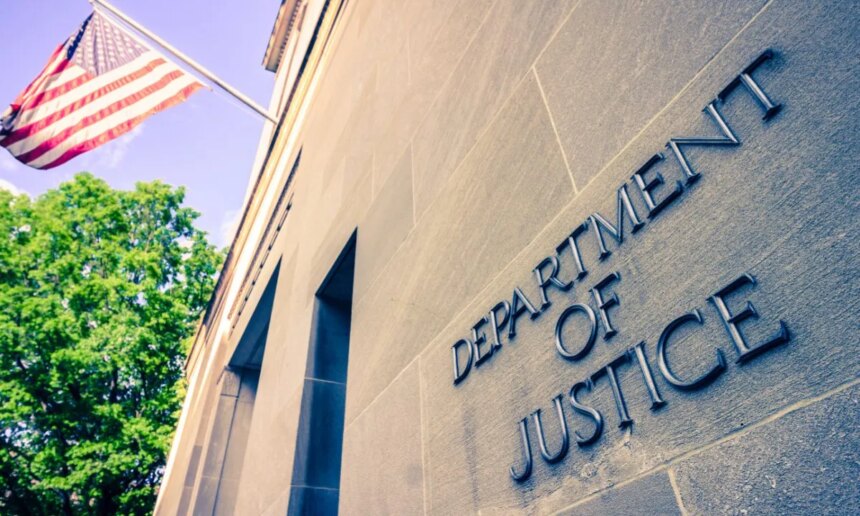
The Justice Department has initiated a significant investigation into the practices of several major banks regarding allegations of politically motivated debanking, as reported by The Wall Street Journal. Subpoenas have been issued to leading financial institutions, including Bank of America, JPMorgan Chase, and Wells Fargo, with a focus on whether these banks have improperly closed client accounts for political reasons.
While Wells Fargo has opted not to comment on the developing situation, requests for statements from the Justice Department, Bank of America, and JPMorgan Chase have gone unanswered.
The subpoenas are described as “far-ranging,” seeking to gather extensive information on account closures that may have violated the Financial Institutions Reform, Recovery, and Enforcement Act of 1989, which addresses various forms of bank-related fraud, among other laws. Some subpoenas reportedly date back to last year, indicating that this investigation has been building over time.
The context surrounding these actions includes an executive order on debanking signed by former President Donald Trump in August 2025. The order aimed to ensure fair banking practices for all Americans, mandating federal banking regulators to assess financial institutions for potential debanking policies and to take corrective measures. It also requires a thorough review of supervisory and complaint data concerning instances of debanking related to religious affiliations, with directives to refer findings to the Attorney General.
In a related incident, Trump filed a $5 billion lawsuit against JPMorgan Chase and its CEO, Jamie Dimon, earlier this year. The lawsuit claims that the bank unjustly closed accounts belonging to Trump and his companies due to political motivations. Fox Business reported that the allegations encompass trade libel, violations of Florida’s unfair and deceptive trade practices act, and breaches of a covenant of good faith and fair dealing.
In response, JPMorgan Chase has maintained that the lawsuit lacks merit, asserting that the bank does not engage in account closures for political or religious reasons. Instead, it pointed out that such actions are typically the result of compliance with legal and regulatory standards, an unfortunate necessity dictated by existing rules and expectations.
This ongoing investigation and the surrounding controversies signal heightened scrutiny of banking practices and policies, emphasizing the intersection of finance and political ideologies in the current economic landscape.