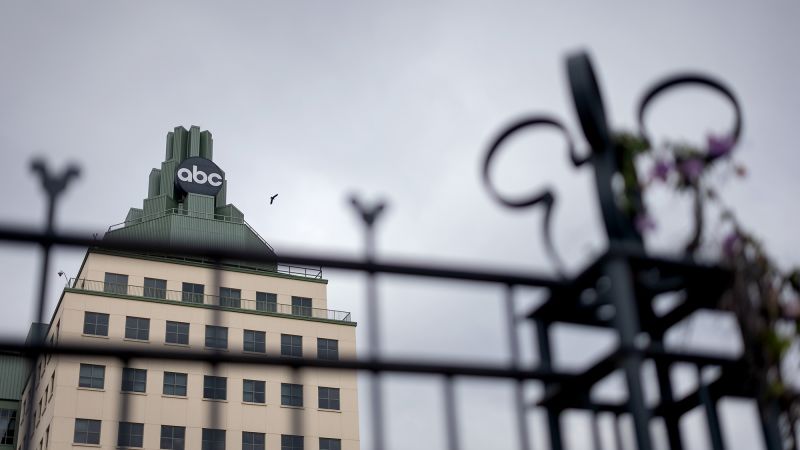
ABC is poised for a significant confrontation regarding First Amendment rights following its recent filing to renew local TV station licenses under protest. This action, taken on Thursday, responds to what ABC describes as an “unlawful, arbitrary, and unconstitutional order” issued by the Federal Communications Commission (FCC).
In an accompanying objection letter, ABC accused the FCC, which it claims aligns with Trump-era policies, of employing “unconstitutional retaliation and coercion” aimed at stifling free speech. This development follows an FCC directive requiring ABC to submit renewal applications for all eight of its owned stations, despite the fact that their current licenses remain valid for several more years. ABC views this as yet another attempt by the FCC to exert undue pressure on the media giant and its parent company, Disney.
In its letter, ABC suggested that the order serves as a punishment for the network’s editorial choices that do not align with the government’s preferences. FCC Chairman Brendan Carr countered that the license challenge forms part of a larger investigation into Disney’s diversity and inclusion policies, specifically allegations of discrimination against individuals based on race or gender. Carr noted that the FCC has been scrutinizing Disney for over a year, stating that the agency is committed to following the facts wherever they lead.
Anna Gomez, the sole Democratic commissioner on the FCC, criticized the inquiry as a politically motivated assault on Disney, claiming that ABC and its stations have fallen victim to what she described as a campaign of censorship and control initiated by the current administration.
The FCC’s heightened scrutiny of ABC has been evident since Trump’s reelection, despite the agency’s limited enforcement tools. Carr has investigated ABC’s relationships with local affiliates, threatened actions over comments made by comedian Jimmy Kimmel, and delved into potential violations of broadcasting rules by shows like “The View.” The recent pressure culminated as Trump intensified calls for Kimmel’s firing.
In light of this escalating tension, ABC has signaled its intent to mount a robust First Amendment defense. Disney has enlisted the services of Paul Clement, a well-known conservative attorney and Supreme Court litigator, who previously articulated concerns over the government’s perceived threat to free speech connected to inquiries about “The View.”
The latest letter concerning station licenses, although unsigned, reflects a legal strategy likely aimed at preparing for a future court dispute. ABC indicated that the FCC had not mandated early license renewals for over fifty years and described the current order as inconsistent with legitimate investigative authority while fundamentally incompatible with First Amendment principles.
ABC expressed concern that the order could pave the way for retaliatory actions against the stations, ultimately reducing independent journalism’s ability to operate free from governmental influences. The letter cautioned that when broadcasters must consider regulatory repercussions before making editorial choices, public access to unbiased journalism suffers.
In conjunction with its licensing paperwork, the FCC released a public notice outlining the “public interest” obligations imposed on broadcasters, a move Carr framed as necessary to ensure compliance with longstanding standards that have remained vaguely defined for years. In response, Gomez urged broadcasters to resist these “threats” and maintain their commitment to independent reporting.
On the same day it filed its license applications, ABC submitted public-interest statements delineating its numerous contributions to the communities it serves, further emphasizing its role as a responsible and engaged media entity.