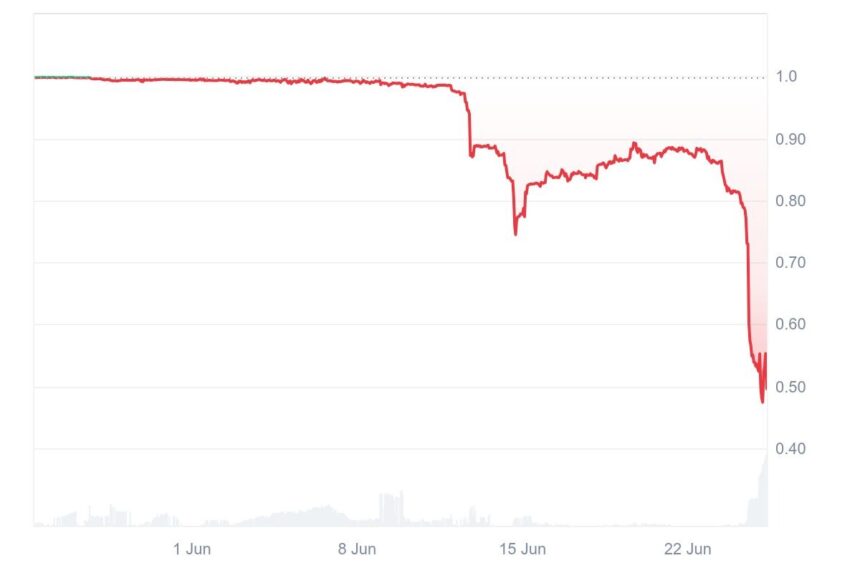
Decentralized finance platform Abracadabra has recently taken emergency measures in response to a significant decline in the value of its crypto-collateralized stablecoin, Magic Internet Money (MIM). The stablecoin has plummeted 50% below its intended $1 peg, raising questions about the stability and structure of such financial products.
The situation mirrors a classic bank run, highlighting the inherent risks associated with the operation of stablecoins, especially those with no backing of deposit insurance or any lender of last resort. The massive withdrawals from MIM’s underlying securities reflect a genuine liquidity crisis, reminiscent of challenges faced by traditional fractional lending banks. This event underscores concerns about whether a so-called “fully” reserved coin can indeed remain stable under pressure.
Historical precedents illustrate the vulnerabilities in stablecoin architectures. The collapse of Terra/UST in May 2022 erased $40 billion in value due to a reflexive death spiral that relied on a complex web of pegs to sister tokens. Similarly, USDC’s peg disintegrated in March 2023 when $3.3 billion of its reserves became inaccessible, demonstrating how external events can unravel the stability of electronic currencies. The case of money market funds during the 2008-09 financial crisis, where some broke the buck but were later rescued, provides further context for the potential fallout in such scenarios.
Critics argue that current stablecoin frameworks are fundamentally unsound, revealing significant structural issues that often emerge during periods of downturn in other areas of the financial system. This raises considerable doubts about the viability of stablecoins, particularly when compared to traditional banking solutions that, while slower, provide a measure of safety for depositors.
The discourse around stablecoins often emphasizes their potential utility for cross-border payments. While it is acknowledged that these instruments can provide necessary purchasing power in countries facing hyperinflation—such as Argentina and Turkey—the allure of stablecoins must be weighed against their speculative nature and potential avenues for criminality.
As well-established banks increasingly explore the use of digital currencies for business and merchant transactions, the once-grand visions of a ‘DeFi’ revolution appear tempered. The notion that stablecoins signify the future of all financial transactions has diminished, eclipsed by a more pragmatic understanding of their limitations.
The ongoing situation with the MIM stablecoin and the challenges surrounding it will undoubtedly continue to evolve, prompting further scrutiny of the stablecoin market and its implications on global financial stability.