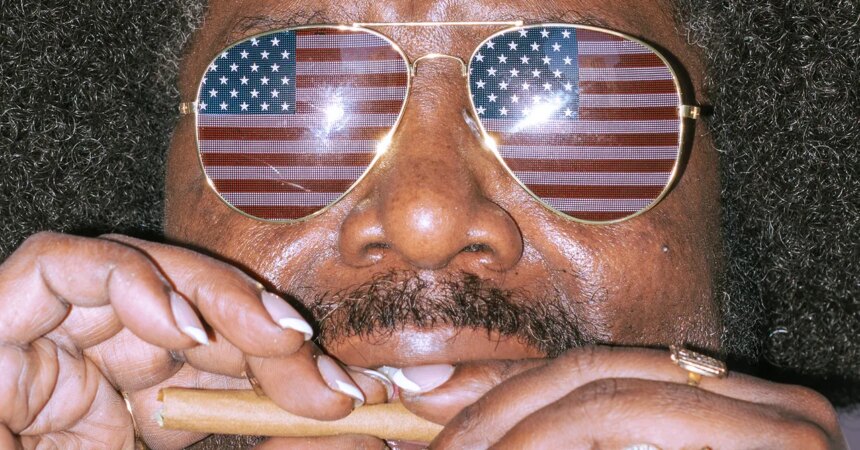
In a vibrant makeshift greenroom at the Venetian Hotel in Las Vegas, Joseph Edgar Foreman, better known as Afroman, continues to embrace his iconic persona. The 51-year-old rapper is seen taking deep inhales of a blunt rolled by his videographer, who sportingly dons a fitted cocktail dress and sky-high heels. Foreman, seemingly unfazed, prepares for his performance as thousands of fans anticipate his arrival, a stark contrast to the intimate dive bars where he has spent much of his career.
Dressed in the same American Flag getup he wore during a recent court appearance, Afroman’s story took a wild turn last year when police raided his home in Winchester, Ohio, under suspicions of drugs and kidnapping. The raid yielded no evidence of wrongdoing, only a jar of “green leafy vegetation,” THC wax, various pipes, and more than $5,000 in cash. Following this confrontation, Foreman channeled his experiences into music, releasing tracks that humorously criticized the officers involved and dissected their personal lives. The aftermath saw seven officers suing him for $4 million, but Foreman emerged victorious, both in court and in the digital realm, where clips of his testimony rapidly gained traction.
Going viral has become Afroman’s specialty, and he cites his 2000 hit “Because I Got High” as a pioneering force in the viral space. While his claims may be up for debate, his ability to capture public attention is undeniable. His court case became a rallying cry for free speech, drawing a fresh audience to his music. One of his standout songs, “Lemon Pound Cake,” incorporates video footage of the raid, including a memorable moment when one officer lustfully eyed a pastry on the counter. This clip has accrued nearly 10 million views on YouTube, leading to some creative fan responses, including the overpowering influx of pound cakes sent to the infamous “Officer Pound Cake” as part of the harassment.
Afroman’s recent win has also stripped away the image of a mere entertainer, casting him as a freedom fighter. This intriguing persona aligns seamlessly with the ethos of the Bitcoin Conference he’s attending, an event described by programming director Craig Deutsch as a perfect match for Foreman’s public narrative of defending his artistic expressions against perceived injustices. The yearly conference has evolved into a gathering not just for crypto enthusiasts but also for average Americans and politically-minded individuals, with past keynotes from figures like President Trump and JD Vance.
As the smoke fills the greenroom, emcee Gregg Davis steps inside, greeted by Foreman and his entourage, which includes colorful characters such as former pimp Bishop Don “Magic” Juan and a few others sharing the celebratory atmosphere. Davis inquires about his introduction, to which Foreman replies with a request to speak from the heart, adding a touch of humor by referencing the “hungry, hustling American dream.” Shortly after, laughter and camaraderie fill the space until Foreman’s manager gently breaks the mood, alerting the crew that hotel staff have caught wind of the weed smoke and are considering involving the authorities.
Afroman, whose ascent to fame started with the humorous strains of “Because I Got High”—a Grammy-nominated comedic reflection on the perils of cannabis use—continues to be a unique figure in the music industry. His multifaceted persona embodies resilience and the spirit of a man unafraid to mock authority in the name of artistic freedom. As the night progresses, one thing remains clear: Afroman is still riding high, both literally and metaphorically, capturing the attention and affection of fans and attendees alike.