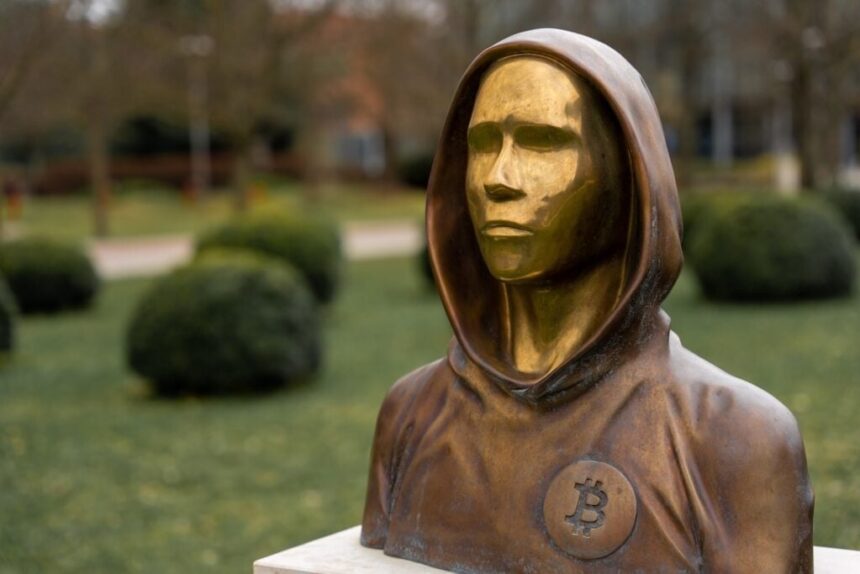
AI technology might soon unlock the identity of Bitcoin’s elusive creator, Satoshi Nakamoto, through an evaluation of their writing style, as suggested by Nic Carter, a Founding Partner at Castle Island Ventures. Carter recently shared a research paper from Cornell University on X (formerly Twitter), detailing how large language models (LLMs) possess a greater capability for identifying pseudonymous online personas compared to traditional methods. The study indicated that these advanced models might significantly jeopardize online privacy.
Carter confidently predicted that improvements in LLMs would lead to the identification of Nakamoto within the next few years using stylometry—the analysis of writing styles. This isn’t the first instance of using stylometric methods to trace Nakamoto; back in 2014, a group of 40 linguistics students from Aston University concluded that Nick Szabo, a computer scientist and legal scholar, was the author of the Bitcoin whitepaper. This finding was attributed to striking similarities in writing between Szabo and the infamous document, as noted by Aston University lecturer Jack Grieve.
Szabo remains a prime suspect in the quest for Nakamoto’s true identity, owing to his knowledge of cryptography and the creation of Bit Gold, a digital currency proposal that many consider a precursor to Bitcoin. Despite speculation, Szabo has repeatedly denied being Nakamoto.
The enigma surrounding Nakamoto continues to capture public interest, largely because the creator is believed to control approximately 1 million BTC—currently valued at around $68 billion. Notably, these coins have remained untouched since Nakamoto stated they were moving on to “other projects” over a decade ago.
The search for Nakamoto is not merely a technological challenge; it represents a broader dialogue about online anonymity and privacy in an increasingly digital world. The implications of AI’s role in identifying public figures could alter how individuals operate within online spaces, stirring conversations around the ethical boundaries of digital privacy.