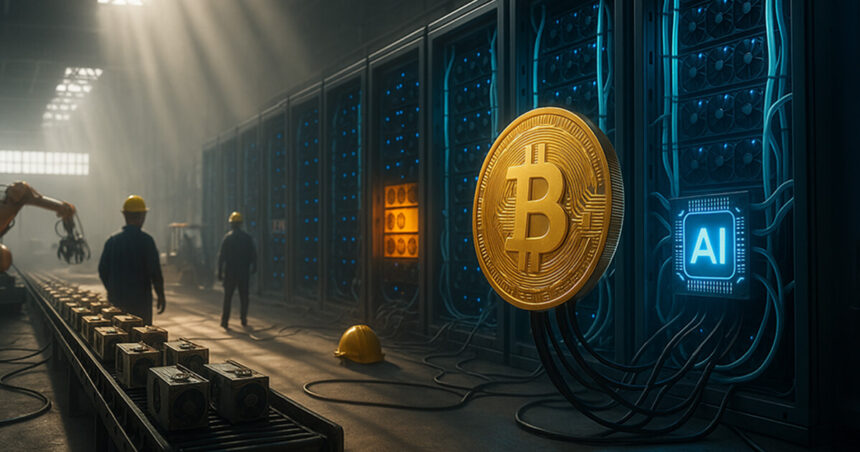
Recent developments within the cryptocurrency mining sector reveal a significant tilt toward artificial intelligence (AI) and high-performance computing (HPC) initiatives among the world’s leading miners. Seven of the top ten miners by hashrate are currently engaged in AI-related programs that are already generating revenue. The remaining three are in the planning stages, signaling a broader industry shift that intertwinesmining operations with AI capabilities.
This strategic pivot is not just about enhancing computational power; it’s a response to evolving market demands. Miners are leveraging their considerable land and energy resources to forge contracts with GPU customers, thereby establishing an alternative revenue stream that can rival their traditional ASIC mining operations. This dual approach is reshaping the economics of mining and attracting the attention of investors.
TeraWulf has set a significant precedent by establishing two long-term hosting agreements with Fluidstack, amounting to approximately 200 MW at its Lake Mariner facility. Reports indicate that Google is backing Fluidstack’s lease obligations, with commitments nearing $1.8 billion and investment options that could see Google hold about 8% of TeraWulf. The financial details of this agreement imply a robust revenue potential of approximately $1.85 million per MW per year, which has now become a benchmark for miners seeking similar AI partnerships.
Core Scientific has also expanded its longstanding relationship with CoreWeave, adding about 70 MW of HPC capacity for operations scheduled to commence in the latter half of 2025. Meanwhile, Bitdeer and Iris Energy are both making strides in the AI cloud space. Bitdeer operates an AI cloud based on NVIDIA DGX systems, while Iris Energy focuses on high-performance APIs using H100 and H200 GPUs.
Other miners are laying groundwork for future AI endeavors. CleanSpark recently secured 271 acres in Texas, complemented by about 285 MW of long-term power, for what it terms a next-generation AI and HPC campus. In August, Marathon Digital Holdings agreed to acquire 64% of Exaion, a subsidiary of EDF, to enhance its global AI and HPC capabilities, with an option to increase its stake to 75% by 2027. Riot Platforms is exploring the possibility of repurposing about 600 MW at its Corsicana facility for AI or HPC applications, although this has led to a downward adjustment in its year-end 2025 hashrate guidance.
The economic dynamics favoring AI and HPC initiatives rest heavily on power availability and predictability. Under the current network conditions, a modern ASIC miner deploying 1 MW might generate between $1.0 million to $1.6 million annually in gross mining revenue before operational expenses. In contrast, TeraWulf’s AI contracts suggest a superior revenue potential, making AI hosting increasingly attractive to miners.
As data center electricity consumption is anticipated to surge, with projections indicating a potential reach of 606 TWh by 2030, the demand for AI workloads is also expected to scale. The Electric Reliability Council of Texas (ERCOT) forecasts record peak demand driven primarily by data centers, indicating a growing symbiosis between mining operations and AI infrastructure. This backdrop prompts utilities to adjust their capital expenditure plans, as American Electric Power has notably increased its five-year capital plan to $72 billion to accommodate the rising demand.
In this evolving scenario, miners that successfully redirect their resources toward AI capabilities may experience a slower growth trajectory concerning hashrate compared to pure-play mining operations. However, the potential for improved enterprise value through contracted revenues and the versatility of power usage may enhance their overall market standing.
The status of major miners regarding AI and HPC involvement indicates varied progress. While firms like Marathon, CleanSpark, and Core Scientific are already generating revenue from AI initiatives, others like Riot Platforms and Bitfarms are still in the planning stages.
Investors are increasingly focusing on the composition of revenues, with metrics concerning contracted AI megawatts and revenue per MW becoming essential indicators of business health. As the market continues to evolve, keeping an eye on utility capital expenditure plans and interconnection timelines will be equally critical to assess how the competitive landscape is reshaping mining economics.
In summary, the intersection of cryptocurrency mining and AI presents a promising frontier for miners, highlighting a shift in focus for both operational strategies and investor interest. As outdoor energy resources become scarce and demand increases, miners with established infrastructures, ready for adaptation, are set to gain significant advantages moving forward.