Bitcoin’s narrative of institutional adoption continues to evolve, yet investor demand has shown significant variability. June witnessed notable outflows from U.S. spot Bitcoin exchange-traded funds (ETFs), with substantial withdrawals reported on June 3 and June 5, totaling approximately $722.3 million, as per Farside Investors.
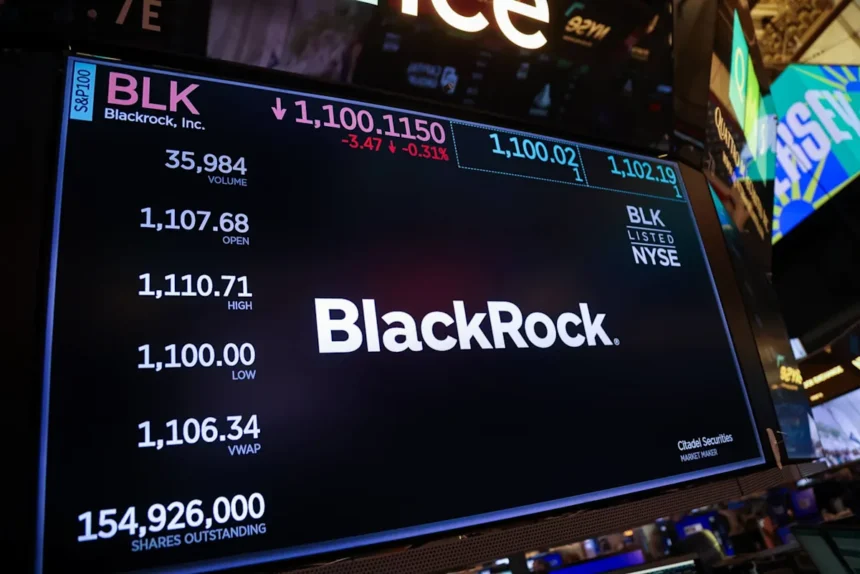
BlackRock has suggested that one reason behind these fluctuations may be investors shifting their focus toward an emerging trend: artificial intelligence (AI). The AI sector has been dominating market attention, redirecting capital towards semiconductor companies, hyperscalers, and various AI-related initial public offerings (IPOs), all while Bitcoin struggles to regain its previous momentum.
Robbie Mitchnick, head of digital assets at BlackRock, remarked on June 22 about Bitcoin’s ongoing challenges since late 2025, which he says reflect a broader trend impacting assets that fall outside the AI spectrum. “It’s been a tough stretch for Bitcoin since last October, consistent with almost all assets not linked to AI,” he noted in an interview with Yahoo Finance. Investors have increasingly favored AI-focused opportunities, leaving alternative assets like Bitcoin, gold, and other precious metals in a less favorable position. “The AI momentum is certainly sucking a lot of the oxygen out of the room,” he added.
The surge in investments toward AI infrastructure, semiconductor companies, and notable technology stock offerings has shifted attention away from Bitcoin and similar assets. Reports indicate that Bitcoin is experiencing one of its weakest starts to a year in over a decade, significantly overshadowed by the growth in AI-related investments.
Similar sentiments were echoed by Arthur Hayes, co-founder of BitMEX, who pointed out that AI has effectively “taken all the money,” as investor capital continues to pivot toward tech-centric options.
Despite the current dominance of AI, BlackRock posits that macroeconomic factors could reignite interest in Bitcoin. Mitchnick highlighted that rising concerns surrounding U.S. debt levels and fiscal deficits could serve as critical catalysts for Bitcoin’s resurgence as the 2026 midterm elections approach. As of June 3, U.S. public debt was nearing $31.6 trillion, with total gross federal debt around $39.2 trillion, according to data from the U.S. Treasury. The Government Accountability Office has raised alarms about debt levels projected to surpass economic growth for decades.
Increasing borrowing costs have notably resulted in federal interest payments exceeding defense spending, further heightening concerns regarding government borrowing and potential money printing. Mitchnick emphasized that these apprehensions could be fundamental drivers for Bitcoin demand moving forward, likening it to similar historical trends with gold. “The more fear there is over the borrowing level and the risk of money printing, that is ultimately the most important, I think fundamental driver ahead,” he stated.
At the time of reporting, Bitcoin was valued at $64,590, highlighting the ongoing volatility and uncertainty within the cryptocurrency market.