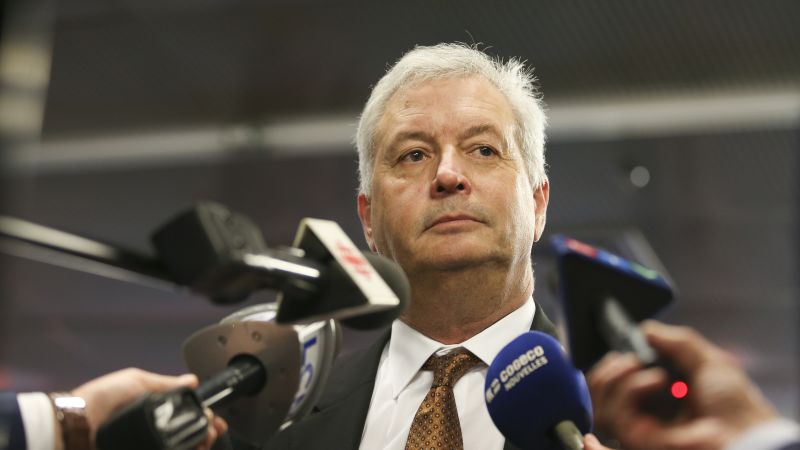
Air Canada has announced that its CEO, Michael Rousseau, will be retiring later this year following criticism over his English-only condolence message after a fatal crash at LaGuardia Airport in New York. The retirement decision comes amid the airline’s struggle to align with Canada’s bilingual nature, particularly in light of Rousseau’s previous failures to address the French-speaking community adequately.
Rousseau, who is 68 years old, informed the board of his intention to step down by the end of the third quarter. The backlash intensified after his video message of condolence, delivered solely in English with French subtitles, was perceived as lacking empathy and cultural sensitivity. Canadian Prime Minister Mark Carney labeled the decision to communicate in English an error in judgment, emphasizing the importance of having a bilingual leader for Air Canada, which is based in predominantly French-speaking Quebec.
Quebec Premier François Legault echoed these sentiments, calling Rousseau’s resignation a necessary step. He stressed that the next CEO must be proficient in French, underscoring the significance of language in Quebec’s identity and culture. This critique was amplified given the tragic circumstances surrounding the crash, which claimed the lives of two pilots, including Antoine Forest, a French-speaking Quebecer.
Rousseau’s tenure has not been without controversy. Since his appointment in February 2021, he has faced scrutiny over his inability to communicate in French, despite assuring stakeholders that he would learn the language. The Office of the Commissioner of Official Languages received hundreds of complaints regarding his lack of bilingual communication, indicating the deep political implications surrounding language in Canada.
Daniel Béland, a political science professor at McGill University, remarked on the politically charged nature of language in Canada, asserting that Rousseau’s initial promise to learn French, coupled with his substantial compensation package, contributed to negative public perception.
Transport Minister Steven MacKinnon acknowledged Rousseau’s service and reinforced the government’s commitment to working with Air Canada to ensure it maintains a safe, reliable, and bilingual service for all Canadians. Meanwhile, some political voices, such as former Conservative Cabinet minister Jason Kenney, argue that airline leadership should prioritize safety and operational reliability over language training.
As Air Canada prepares for a leadership transition, the focus will inevitably turn to its next CEO and the role they will play in bridging the linguistic divides that have historically challenged the region.