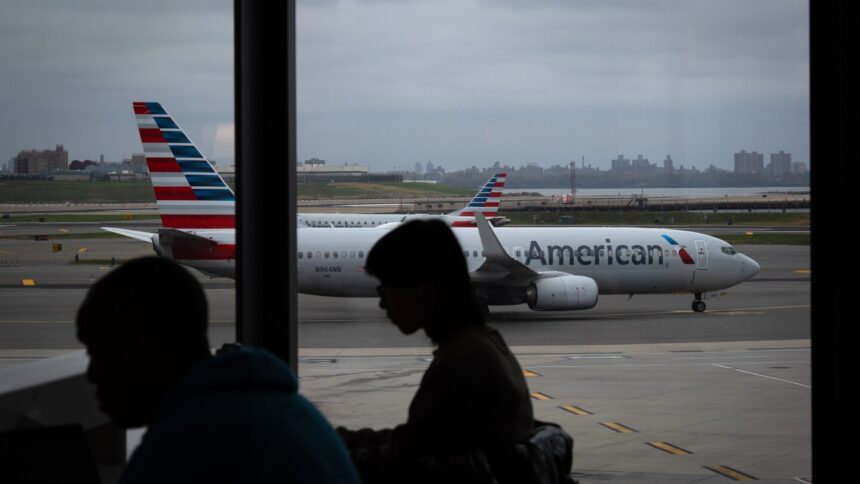
The ongoing government shutdown is causing significant disruptions at airports nationwide, with the travel situation expected to worsen if Congress fails to reach a resolution soon. Flight cancellations have spiked, with U.S. airlines grounding over 1,500 flights on Saturday and more than 2,900 on Sunday in response to an FAA directive mandating reduced air traffic. This decision stems from staffing shortages as some air traffic controllers, who have gone nearly a month without pay, have begun to skip shifts.
As of early Monday, nearly 1,600 additional flights were canceled, with projections of nearly 1,000 more for Tuesday. Major airports, particularly Newark, Orlando, Chicago, and Detroit, are experiencing significant delays, with departures lagging by more than an hour according to FlightAware data. This situation is compounded by the fact that this marks the second pay cycle in which air traffic controllers have not received their salaries, prompting an urgent response from union leadership. Nick Daniels, head of the air traffic controllers’ union, is scheduled to hold a press conference Monday morning to highlight the adverse effects of the shutdown on their workforce.
The ripple effects of these disruptions are increasingly noticeable as airlines struggle to reposition their aircraft and crew due to the shortage of available air traffic controllers. This past weekend, the FAA instituted a 4% mandatory reduction in flights to manage the dwindling workforce, with plans to increase this to 6% on Tuesday and 10% by the upcoming weekend. Transportation Secretary Sean Duffy stated on “Fox News Sunday” that there may be further cuts, potentially reaching as high as 20%.
Duffy noted that the number of controllers willing to come to work is decreasing daily, increasing the strain on those still on duty. The government’s chronic shortage of air traffic controllers has been a concern for several years, with various administrations attempting to encourage retirement-age personnel to extend their service. However, the current shutdown has intensified these challenges, leading some controllers to hasten their retirements.
While a 4% reduction may seem moderate, it significantly impacts operations at some of the country’s busiest airports. The FAA has emphasized that these cuts are essential for maintaining safety, as the remaining air traffic controllers are working extensive hours, often under mandatory overtime conditions, amid funding uncertainties. Without a timely resolution, the situation may deteriorate further, especially as the holiday travel season is approaching. Duffy warned that air travel might be “reduced to a trickle” during the Thanksgiving week if the government shutdown persists.