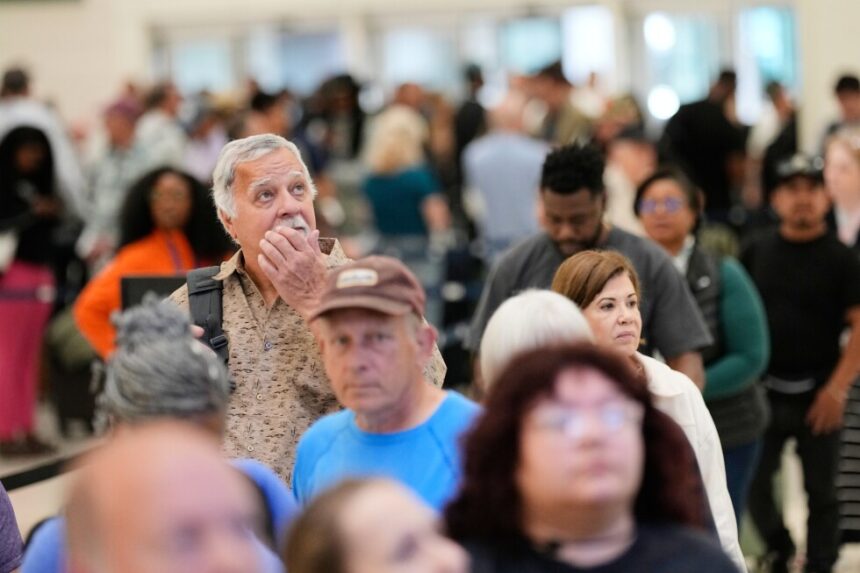
Images depicting lengthy security lines at airports across the United States, coupled with troubling accounts of missed flights, have prompted anxious travelers to arrive significantly earlier than necessary for their departures. However, in a bid to alleviate congestion during peak hours, some airports are advising passengers against this preemptive strategy.
John Glenn International Airport in Columbus, Ohio has issued guidance cautioning against excessive early arrivals. The airport cited the ongoing Congressional funding impasse that has led to crowded security checkpoints, stating that early arrivals are, paradoxically, exacerbating delays. In a social media post, the airport explained, “Arriving too early can actually create longer lines right when we open,” and emphasized that “spacing out arrival times helps keep things moving smoothly for everyone.” To guide passengers, the airport provided a chart recommending arrivals just 90 minutes prior to departure times.
This clear communication, however, comes amidst a backdrop of unpredictability—travelers face difficulty predicting which airports may soon experience surge conditions that lead to long wait times. The current government shutdown is affecting staffing levels at the Transportation Security Administration (TSA), resulting in significant checkpoint delays. Some major airports, including George Bush Intercontinental Airport in Houston, have reported security wait times stretching up to four hours, marking it as a major bottleneck for travelers.
Notably, many airports are still operating with manageable wait times, similar to those seen during typically busy travel periods. Airlines are urging passengers to check TSA wait times before heading to the airport as a strategy to navigate this uncertain landscape.
The behavior of travelers is reminiscent of the panic buying observed at the onset of the COVID-19 pandemic in 2020. Anxiety around travel has heightened due to extensive media coverage of airport chaos, and many passengers find themselves grappling with a lack of control over their travel experiences. Shari Botwin, a clinical social worker in Philadelphia, noted, “It’s human nature… There’s so much media attention about the chaos at airports,” which leaves travelers hesitant to heed recommendations to arrive at more conventional times.
As the country grapples with these travel challenges, both passengers and airports are navigating this unique and stressful atmosphere, exploring ways to maintain a smoother travel experience for all.