In a striking development reflecting the soaring demand for generative AI technologies, OpenAI is reportedly set to invest an extraordinary $300 billion with Oracle over the next five years. This monumental deal, which is anticipated to be one of the largest cloud computing contracts in history, was revealed by prominent news outlets including The Wall Street Journal and The New York Times.
The agreement encompasses an impressive delivery of up to 4.5 gigawatts of power capacity. To put this into perspective, this amount of energy is equivalent to that produced by two Hoover Dams or enough power to supply around 4 million households. It is expected to take effect in 2027, although both OpenAI and Oracle have refrained from commenting on the specifics.
This strategic move follows a significant trend in the tech industry. Research indicates that the number of data centers in the United States nearly doubled between 2021 and 2024, with predictions of a 9% annual growth in demand for more facilities through 2030. Furthermore, it is estimated that energy consumption by these data centers will double by 2035.
Traditionally, OpenAI’s cloud computing needs were met solely through Microsoft Azure, but this new partnership with Oracle marks a diversification of its cloud resources. In January, OpenAI unveiled the Stargate Project, a bold initiative aimed at investing $500 billion over four years into building critical AI infrastructure, including data centers. This initiative involves collaboration with major players such as Oracle, Microsoft, Nvidia, and Softbank.
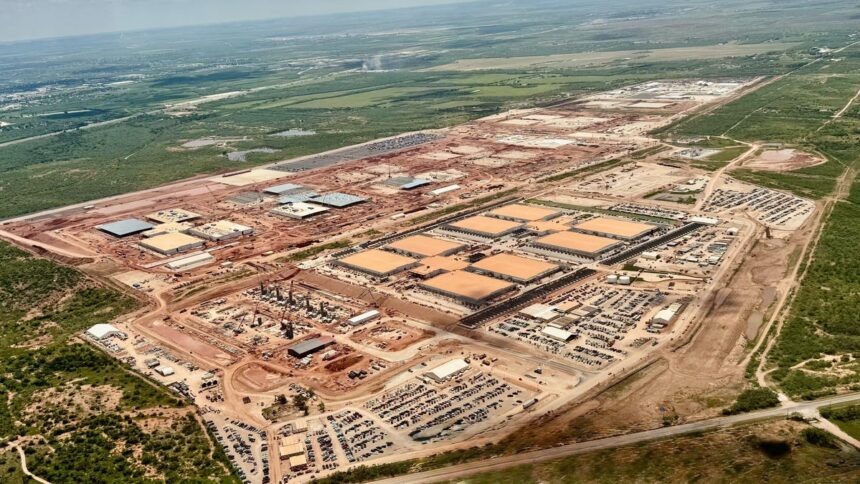
The Stargate facility is currently under construction in Abilene, Texas, and reflects OpenAI’s ambition to significantly expand its computational capabilities. In addition to the 4.5 gigawatts in the recent deal, the January announcement indicated a promise of 10 gigawatts in overall capacity.
The emergence of ChatGPT as the most utilized chatbot in the world has ignited fierce competition within the AI landscape, as rivals like Google’s Gemini, Anthropic’s Claude, and Perplexity’s software challenge OpenAI’s dominance. Amid this rapid growth, OpenAI CEO Sam Altman has expressed concerns over the possibility of an AI bubble, hinting at the precarious nature of the current tech boom.
As the demand for data centers and the associated energy requirements continue to escalate, the partnership between OpenAI and Oracle may represent a critical turning point in the race to harness and deploy generative AI technologies on a global scale.