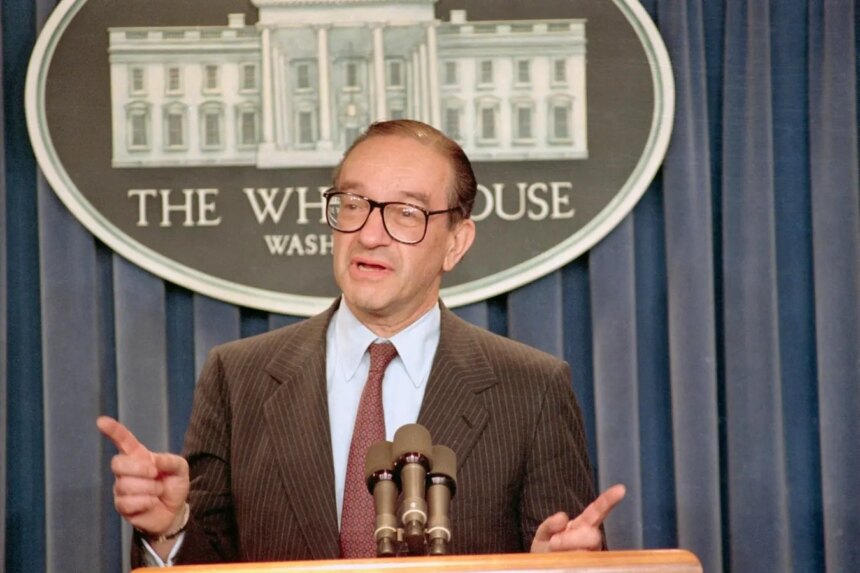
Alan Greenspan, the former chair of the Federal Reserve, passed away this week at the age of 100, prompting a wave of reflections on his complex legacy. Often described as a “tragic hero,” Greenspan is recognized for his influential role during both economic prosperity and crisis. Pervasive obituaries highlight his market-friendly policies, with some crediting him for averting a global economic catastrophe in the late 1990s. However, he has also faced significant criticism for his part in the events leading up to the 2008 financial crisis.
Mainstream narratives suggest that while Greenspan was once hailed as a transformative figure—featured on the cover of Time magazine’s “Committee to Save the World”—his legacy is marred by missteps attributed to the crisis of 2008. Critics argue that his policies contributed to the subprime mortgage issues and financial turmoil. Yet, such assessments overlook essential components of his tenure. Greenspan was indeed an advocate for market-driven policies, but he also recognized the need for regulatory measures and raised alarms about subprime lending as early as 2002.
Greenspan’s tenure as Fed Chair fundamentally altered the relationship between the Federal Reserve and the capital markets. Under his leadership, which lasted 18 years, the Federal Reserve became much more responsive to market expectations. His approach linked Fed decisions to market trends in ways that hadn’t existed previously, making the Fed Chair a central figure in financial speculation and forecasting.
Three major shifts characterized Greenspan’s legacy. First, he initiated a “Transparency Campaign,” transforming the way the Fed communicated its interest rate decisions. Before 1994, rate changes were made in secrecy, leaving traders to deduce information from bond market movements. Greenspan’s decision to disclose rate changes allowed the market to react in more predictable ways, but it also led to what is often termed the “Fed Drift,” wherein stock market gains were closely tied to Fed meeting dates. Notably, research indicates that a significant portion of annual stock market returns since this shift can be traced back to pre-FOMC announcement trading.
Second, Greenspan developed ‘Fedspeak,’ a nebulous dialect of communication that obscured precise meanings and kept markets guessing about actual intentions behind Fed policy. This ambiguity meant that any slight verbal misstep from the Fed Chair could provoke dramatic market reactions, leading to volatility that can be unhealthy for normal market functioning.
Finally, Greenspan is often associated with the concept of the “Greenspan Put” following his response to the stock market crash of October 19, 1987. By pledging the Fed’s readiness to provide liquidity, he effectively established an expectation that the Fed would intervene to prop up the market whenever it faltered. This approach was later expanded by his successors, especially during the post-2008 financial environment, through mechanisms like Quantitative Easing (QE). These measures reinforced the Fed’s role in stabilizing asset prices, fostering what some view as an unhealthy reliance on Fed interventions in the markets.
The implications of Greenspan’s policies are profound and complex. While he undoubtedly modernized the Federal Reserve and expanded its influence, the consequences of his leadership raise important questions about accountability and governance in financial markets. As investors cling to Fed signals, the challenge remains: how to navigate the delicate balance between managing monetary policy and maintaining healthy market environments without the enduring entanglement that characterized Greenspan’s era.