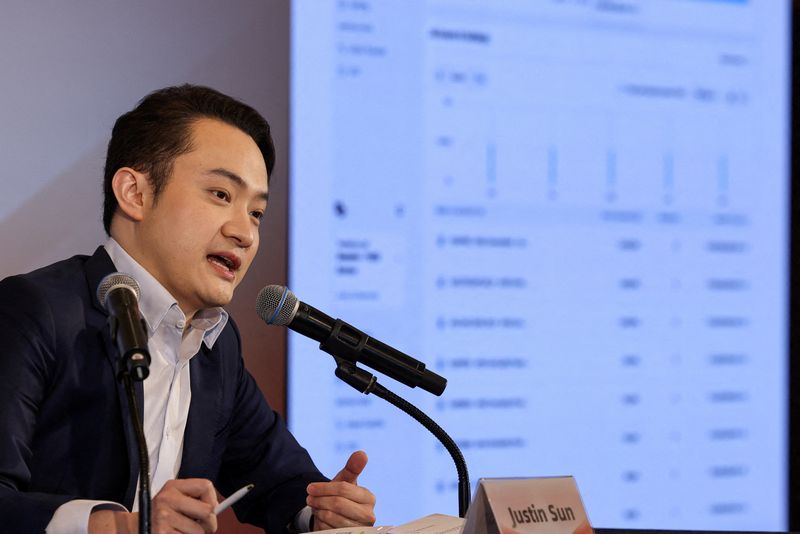
A significant investor in World Liberty Financial, a cryptocurrency venture associated with former U.S. President Donald Trump, has made alarming claims regarding the company’s internal practices. Justin Sun, a prominent crypto entrepreneur, alleged on the social media platform X that World Liberty Financial has integrated a controversial mechanism allowing it to freeze and restrict private holdings of its WLFI token without notice or reason.
In a series of posts, Sun described this feature as a “backdoor blacklisting function” embedded in the blockchain contracts for the tokens. He cautioned that this would enable World Liberty to “unilaterally” confiscate the property rights of any token holder, raising serious concerns about user autonomy and the integrity of the platform. However, it remains unclear whether such a tool actually exists, as Reuters has been unable to verify these claims or obtain specific details about Sun’s own trading activities.
In response to Sun’s accusations, World Liberty’s official account on X firmly refuted the allegations, asserting, “We have the contracts. We have the evidence. We have the truth. See you in court pal.” When contacted for further comment, a company spokesperson referred back to the posts on social media. Sun has not publicly responded to requests for comment from Reuters.
World Liberty is among several profitable crypto initiatives co-founded by the Trump family, which reported generating over $460 million in revenue for them during the first half of 2025. The venture, branded as a decentralized finance app, is still in development, having initially announced its intentions during its launch in 2024. Sun emerged as the largest known investor in World Liberty after reportedly investing tens of millions in WLFI tokens and later increasing his holdings to at least $75 million.
Sun has publicly voiced his support for the Trump family’s venture. In an earlier interview, he described his investment as a vote of confidence in what he referred to as an “excellent project.” However, Sun has faced his own legal troubles, including a $10 million settlement with the U.S. Securities and Exchange Commission (SEC) this past March over allegations of fraud and selling unregistered crypto securities, though he did not admit to any wrongdoing.
World Liberty’s risk disclosures note that the company retains the authority to block and freeze wallet addresses tied to activities it deems illegal or in violation of its terms. This capability is not unique to World Liberty; other cryptocurrency firms, including Tether, have similar functionalities to prevent illicit usage, usually responding to law enforcement inquiries.
In his latest posts, Sun claimed he was the “first and single largest victim” of this alleged World Liberty tool, referring to the freezing of his token holdings in September 2025. At that time, World Liberty had stated that it did not aim to blacklist individuals but instead reacted to “malicious or high-risk activity that could harm community members.”
On Monday, Sun shared purported blockchain records suggesting that his digital wallet had been blacklisted by an account with special administrative controls. He highlighted the troubling implication that a single individual within World Liberty could wield the power to freeze the assets of any token holder, questioning who that person might be.
While the ongoing disputes raise significant questions about the governance practices and operational transparency of World Liberty Financial, regulatory uncertainty looms large over the entire cryptocurrency sector in the United States. The SEC has not clarified its jurisdiction regarding the freezing of tokens, leaving many associated with the industry in a state of ambiguity.