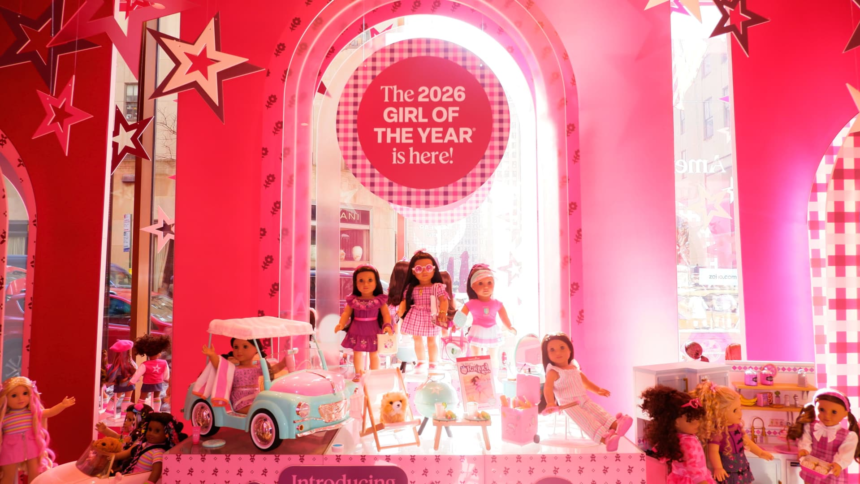
The flagship American Girl Place at Rockefeller Center in New York City offers a nostalgic atmosphere, where the air carries a faint scent of vanilla and young girls enthusiastically explore doll displays laden with miniature clothing and accessories. Under lavish chandeliers, classic red boxes of dolls are showcased as if in a museum, while blow dryers buzz in the Doll Salon, and cupcakes decorated with pink frosting are served to dolls seated at tiny tables.
Despite this enchanting scene, American Girl, celebrating its 40th anniversary, faces a significant shift in the market landscape. The brand has seen a decline in sales, which have dropped from over $600 million annually a decade ago to roughly $200 million today. Industry analysts note that this moment is precarious for both American Girl and the broader doll market. Jaime Katz from Morningstar underscores that modern children’s play has become predominantly digital, leading to difficulties for traditional doll brands.
The pandemic exacerbated existing challenges, forcing American Girl to reduce its physical footprint from around 15 stores in 2019 to just seven across the U.S. Competing against less expensive alternatives, such as Target’s “Our Generation,” has made the premium price of American Girl dolls—starting at $135—less attractive in an inflation-sensitive market. Parents today are increasingly strategic about discretionary spending, with many considering the price of an American Girl doll too steep in comparison to other options.
Competition in the toy industry extends beyond other dolls. The emergence of tablets, gaming consoles, and short-form video content has reshaped what children engage with during playtime, prompting a re-evaluation of what constitutes a “toy.” Over recent quarters, sales in Mattel’s doll categories, including American Girl, have faced declines, even in the wake of the successful “Barbie” film released in 2023.
Under these circumstances, the activism of investors has emerged, urging Mattel to streamline its portfolio amid ongoing financial woes. While American Girl remains beloved, the question of its strategic importance in Mattel’s broader operations looms large.
Inside the enchanting flagship store, the emotional connection many customers hold with the brand feels palpable. Lisa Kandoski reminisces about how the Molly McIntire doll, a World War II-era character, shaped her childhood and instilled values of bravery and resilience. This emotional resonance has been a core tenet of American Girl since its inception, introducing young girls to historical narratives that reflect weighty societal issues.
Throughout its history, American Girl has expanded beyond dolls, venturing into publishing and various forms of entertainment. The brand continues to adapt, introducing characters who resonate with contemporary audiences. The latest “Girl of the Year,” Raquel Reyes, is a biracial DJ and animal rescuer, catering to evolving narratives around diversity.
Despite the challenges, American Girl has witnessed sporadic sales growth in recent quarters, differentiating itself through a combination of nostalgia and innovation. As adult consumers nurture their own childhood memories by purchasing dolls for themselves or their children, the brand is strategically focusing on this demographic. With forecasts suggesting that adult toy purchases are on the rise, American Girl plans to release modernized versions of its original six characters and its first adult-focused book.
To remain relevant, American Girl acknowledges the need to evolve without losing its essence. The brand intends to capitalize on nostalgia while engaging the next generation through contemporary storytelling and digital platforms, including partnerships with social media platforms and online gaming environments. The goal is to create a cohesive presence that spans generations, ensuring that American Girl remains a cherished part of the toy landscape for years to come.