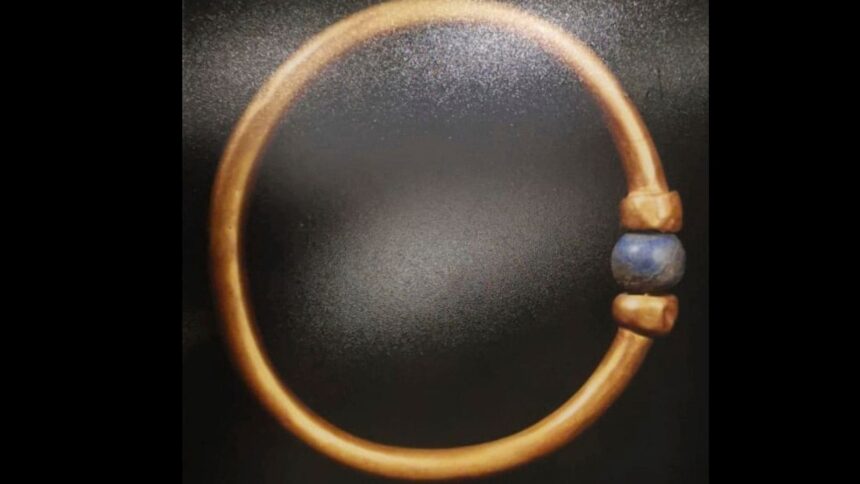
Egyptians are expressing their frustration and anger following the revelation that a significant piece of their ancient heritage—a 3,000-year-old bracelet belonging to Pharaoh Amenemope—was stolen from the Egyptian Museum in Cairo. The theft, which occurred on September 9, was confirmed by the country’s Tourism and Antiquities Minister, Sherif Fathy, during a recent statement on state television. He attributed the incident to “laxity” in security procedures at the museum and noted that the investigation is ongoing.
The bracelet, which featured a lapis lazuli bead, was taken from a restoration lab that lacked adequate security measures, including surveillance cameras. Four individuals have since been arrested in connection with the crime, one of whom is a museum restoration worker. According to the Interior Ministry, this worker confessed to handing over the bracelet to an associate who owned a silver shop in the Sayyeda Zainab district of Cairo.
The investigation revealed that the bracelet was sold first for approximately $3,800 to a gold workshop, where it was ultimately melted down to create other pieces of jewelry. Security footage was released showing the shop owner receiving the stolen artifact, weighing it, and making a payment to one of the suspects. The Interior Ministry reported that the suspects have confessed to their involvement and that the proceeds of the theft have been seized.
In light of this incident, some experts have voiced their concerns regarding the security of Egypt’s cultural heritage. Monica Hanna, dean of the Arab Academy for Science, Technology & Maritime Transport, suggested that the country should suspend overseas exhibitions until more stringent control measures can be implemented to safeguard artefacts. Meanwhile, human rights lawyer Malek Adly labeled the theft an “alarm bell” and urged the government to enhance security for antiquities both on display and in storage.
Amenemope, who ruled Egypt during the 21st Dynasty approximately 3,000 years ago, was buried in a tomb located in the Tanis royal necropolis, a site rich in history that was discovered in 1940 by French archaeologist Pierre Montet. The necropolis houses about 2,500 objects, including golden masks, intricate jewelry, and finely crafted silver coffins.
This recent theft has drawn parallels to previous cultural losses in Egypt, reminding many of the 2010 theft of Vincent van Gogh’s “Poppy Flowers” painting from a Cairo museum. The ongoing concerns over the security of Egypt’s cultural treasures continue to resonate among the public, sparking calls for more robust measures to protect their invaluable national heritage.