The ongoing conflict between the U.S. and Israel against Iran has triggered a significant crisis in Asia, particularly regarding oil supply, as the Strait of Hormuz has effectively been closed. Authorities across the region, from New Delhi to Manila, are feeling the pressure and are implementing emergency measures to mitigate shortages and prevent soaring oil prices.
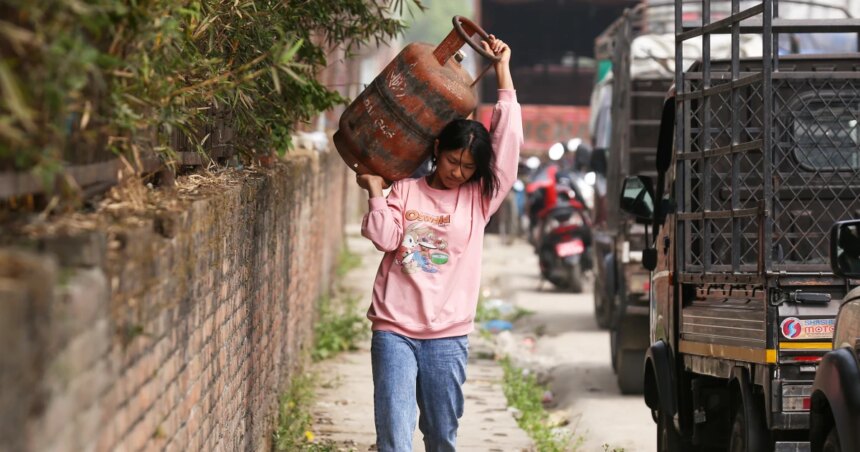
In Nepal, citizens have been seen lining up at gas stations, struggling with empty red cooking-gas cylinders. The country’s main oil company has announced it will only partially refill these cylinders with liquefied petroleum gas (LPG) in a bid to conserve dwindling stocks.
India, which ranks as the second-largest LPG importer after China, is facing panic-buying. The international price of Brent crude oil has exceeded $100 a barrel, causing heightened anxiety among consumers. The situation is a stark reminder of the region’s reliance on oil from Gulf nations, with the International Energy Agency indicating that the Iran conflict has led to the “largest supply disruption in the history of the global oil market.”
Unlike the more diversified oil sources enjoyed by the U.S. and Europe, Asian countries heavily depend on imports that transit through the Strait of Hormuz—a crucial shipping corridor responsible for about 20% of the world’s oil supply. Robert Savage from Bank of New York Mellon highlighted the complexities involved in refining oils from multiple origins, emphasizing the challenges for Asian markets.
The ramifications extend to several countries, including Singapore, Thailand, South Korea, Pakistan, and Japan, as detailed in a research note from Eurasia Group. The escalating Middle Eastern conflict has triggered an energy crisis that leads governments to ration fuel while seeking alternative supplies.
In India, emergency measures have been invoked to maximize LPG production, ensuring that essential services, such as hospitals, remain supplied. Despite authorities reassuring the public that the country has ample oil reserves, the panic-buying trend is raising alarms about domestic resource strain. Bharat Petroleum, a major oil company, has urged consumers on social media to refrain from irrational panic and avoid crowding fuel stations.
The pressure is not just localized to India; neighboring nations such as Bangladesh, Sri Lanka, and the Maldives have reached out for supplies. Notably, Bangladesh has implemented measures like closing universities and rescheduling holidays to conserve energy and fuel in response to the crisis. Meanwhile, Southeast Asian countries are also taking preemptive actions; the Philippines has adopted a four-day workweek for government employees, while Vietnam encourages remote work and urges citizens to minimize vehicle use.
As the situation continues to evolve, the impacts of the conflict are resonating across Asia, underscoring the region’s vulnerability to disruptions in oil supplies.