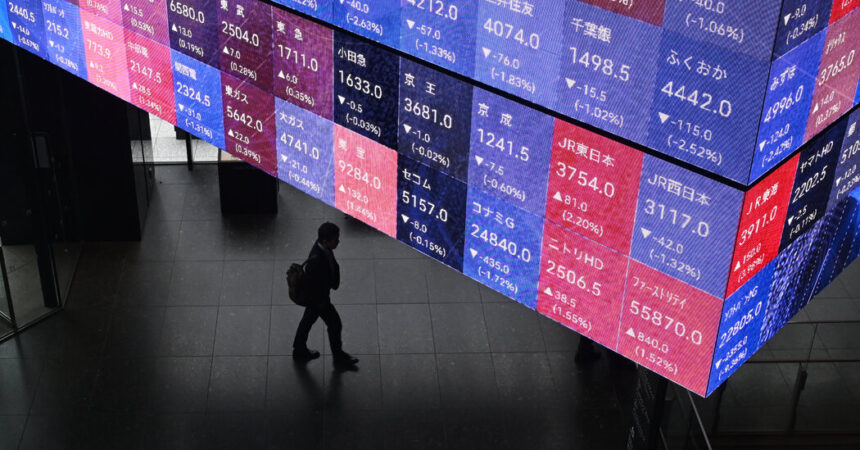
Stock markets across Asia experienced a significant downturn on Friday, primarily driven by declines in major technology shares. Investors are grappling with uncertainties surrounding the future of artificial intelligence spending, questioning whether its rapid growth has reached a plateau or is poised for further expansion.
In South Korea, the KOSPI index fell by 8 percent, reflecting the intense scrutiny of investor sentiment regarding the AI sector. This index has become a critical indicator, heavily influenced by the performance of the country’s leading semiconductor companies, Samsung Electronics and SK Hynix. Shares of Samsung plummeted by 9 percent, while SK Hynix witnessed a staggering 10 percent drop. The losses capped a challenging week for South Korean equities, which had previously been the strongest-performing major stock market since the beginning of the last year. The KOSPI had already fallen 10 percent on Monday and has exhibited extreme volatility, alternating between sharp losses and gains within the same trading sessions.
Morgan Stanley noted in a recent research report that the KOSPI’s robust performance had drawn a surge of retail investors, fostering increased market liquidity but also heightening volatility. Meanwhile, Japan’s Nikkei 225 declined nearly 5 percent, and Taiwan’s stock market fell by 3 percent. Stock markets in Hong Kong and mainland China also showed downward trends on the same day.
Earlier in the day, futures linked to the S&P 500 indicated a modest gain in anticipation of U.S. markets reopening. However, with the intensifying losses across Asian markets, market sentiment shifted negatively, leading to a 0.7 percent drop in futures markets. This widespread sell-off underscores the precarious state of investor confidence in the technology sector and raises critical questions about the future trajectory of AI investments.