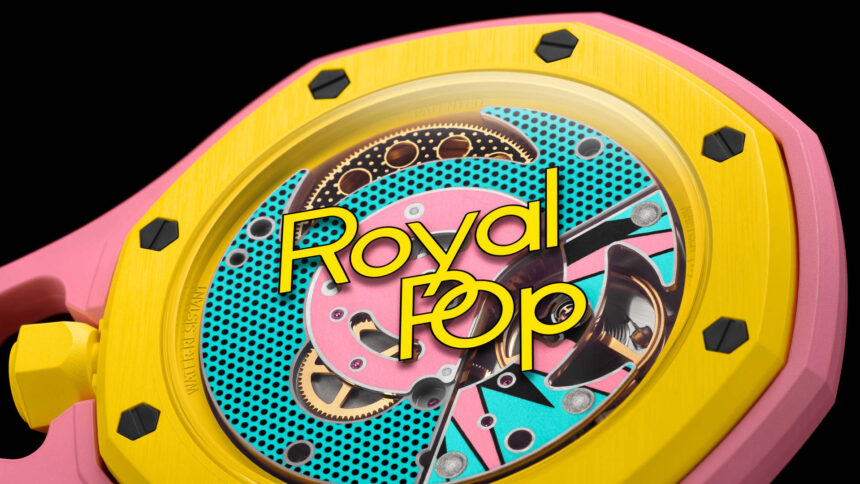
When luxury watchmaker Audemars Piguet (AP) unveiled its collaboration with Swatch last month, it stirred mixed reactions among collectors and enthusiasts. Some in the horology community voiced concerns that this partnership could undermine the exclusivity associated with AP, a brand recognized as part of the “Holy Trinity” of luxury watchmakers alongside Rolex and Patek Philippe. Notably, rapper DDG even indicated he might resort to selling his $180,000 Audemars piece if the collaboration diminished the brand’s prestige.
Initial worries revolved around the collection’s potential to dilute AP’s storied reputation for intricate designs and high-end craftsmanship in favor of affordability and mass appeal. Critics pointed out that the Royal Pop series, featuring vibrant watches sold on lanyards, diverged significantly from the classic, high-cost Royal Oak, which typically commands prices above $50,000 and is accompanied by lengthy waiting lists.
However, in the weeks following the launch of the AP-Swatch Royal Pop collection, market reactions appear more favorable than initially anticipated. According to Hamza Masood, head of partnerships at WatchCharts, a firm that monitors secondary market prices for luxury watches, there has been no notable decline in the value of Audemars Piguet watches as a result of this new line. “There has been no discernible impact on AP prices from the launch,” he stated, easing concerns about a potential collapse in brand equity.
Masood further explained that the Royal Pop line represents AP’s strategic initiative to capture the interest of a younger demographic of collectors. Unlike traditional models that cater to seasoned watch enthusiasts, Royal Pop introduces a more approachable price point and design, potentially attracting women and new collectors to the brand. “Fundamentally, everybody recognizes that this does not really eat into AP equity in any real, meaningful way,” he noted. “The product is not diluting the Royal Oak collector experience, because it’s not even designed to be a wristwatch.”
Despite a stable secondary market for AP, challenges remain in the broader luxury watch sector. Following a speculative boom during the pandemic, the luxury watch market saw a significant downturn in 2022, with prices only just beginning to stabilize. The AP Index, which tracks the top 30 models from the brand, is currently down approximately 40% from its peak in 2022. Competing luxury brands, Rolex and Patek Philippe, have similarly experienced declines.
Despite these market fluctuations, the first quarter showed a slight uptick in AP’s secondary prices, rising by 2%, compared to increases of 1.7% for Rolex and 3% for Patek. However, Masood noted that AP’s inventory challenges—aging stock compared to its competitors—suggest a growing gap between supply and demand.
One of the significant outcomes of the Royal Pop launch is the cultural engagement it has generated, especially on social media platforms. The collaboration captures the attention of a younger audience, laying the groundwork for future demand for AP’s more classic offerings as these young consumers mature and gain purchasing power. In the context of AP’s production capacity, which is limited to around 50,000 watches annually compared to Rolex’s over a million, the company’s strategic approach is long-term.
Masood pointed out that while some collectors may view this collaboration as a risk to horological credibility, AP is potentially gaining cultural relevance among younger consumers. “The bet that they’re making is that all this collector teeth-gnashing may represent a loss of horological credibility, but in exchange, they’re purchasing cultural credibility in front of a wider audience,” he concluded. This evolution in brand strategy may ultimately enhance AP’s cachet in the luxury watch market over time.