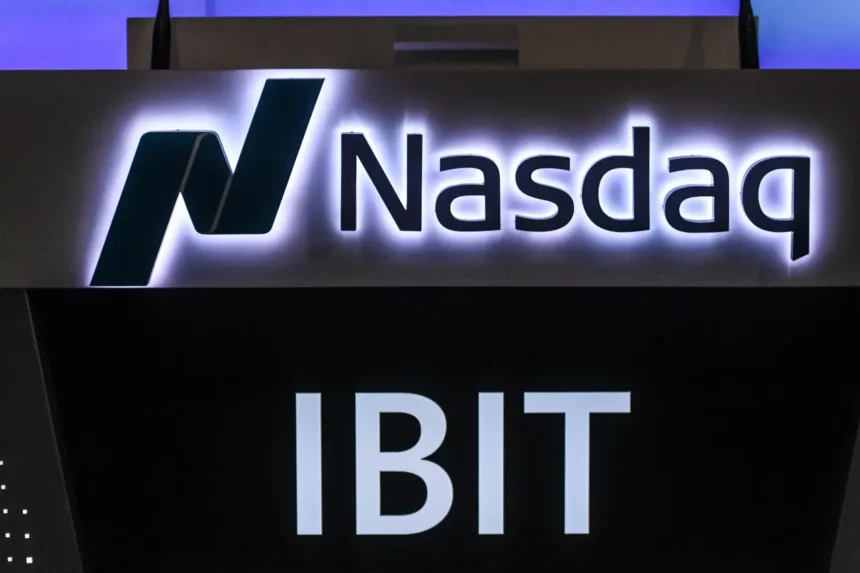
The latest negative trend in Bitcoin has left investors in BlackRock’s spot Bitcoin ETF grappling with significant losses. According to ETF Store President Nate Geraci, the average investor is facing a loss of about 40% following a sharp decline in Bitcoin’s price. Investment sentiment has taken a hit, with many mainstream investors encountering what Geraci describes as a “brutal intro” to cryptocurrency.
As reported on social media platform X, Geraci referenced Bloomberg data to illustrate the extent of the downturn. Notably, in mid-2025, despite the prevailing environment, the typical investor in the iShares Bitcoin Trust (IBIT) was still experiencing gains of approximately 30%. However, these gains have since evaporated amidst a subsequent plunge in Bitcoin’s value.
The challenges facing the Bitcoin ETF extend beyond mere price fluctuations. The dollar-weighted return, which considers both the magnitude and timing of investor inflows, indicates that many investors entered the market at higher price points. For instance, the fund launched in January 2024 with Bitcoin priced significantly lower. Consequently, as Bitcoin currently trades around $60,515— substantially down from its previous high near $100,000—about 40% of the average investor is now in a losing position.
Despite these challenges, IBIT remains notable as one of the most successful ETF launches in history. As of late June, the fund held approximately 750,302 Bitcoin with a total value nearing $44.6 billion. Although the ETF closed at $33 on Friday, the retail sentiment surrounding IBIT saw a slight uptick, moving from a ‘neutral’ to a ‘bullish’ outlook, even as chatter on platforms like Stocktwits maintained normal levels.
Compounding these challenges are the ongoing outflows affecting spot Bitcoin ETFs, which have lost about $5 billion collectively this year. Murphy highlights that IBIT alone has suffered around $1.7 billion in net withdrawals just this month, with total assets dropping nearly in half from a peak of about $100 billion in late 2025.
While the market downturn could be perceived as a decline in investor appetite, Murphy attributes it more to an emotional shift rather than fundamental issues with the cryptocurrency itself. She references a broader economic context involving inflation concerns and the expectation of further interest rate hikes, as well as geopolitical uncertainty and a shift of speculative capital towards the AI and semiconductor sectors.
“With a focus on ETF asset flows, it’s clear that spot Bitcoin ETFs are currently experiencing the weight of investor jitters,” Murphy stated, emphasizing the need for potential investors to navigate this volatile landscape with caution.