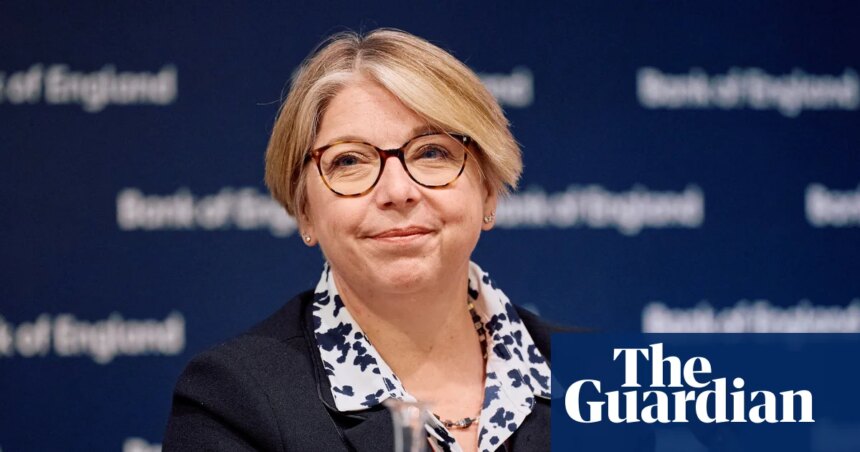
Record-high global stock markets may be masking deeper risks in the global economy, according to Sarah Breeden, the deputy governor for financial stability at the Bank of England. Breeden expressed concerns that macroeconomic risks are not adequately reflected in equity prices. She highlighted the increasing apprehensions surrounding private credit markets, overvalued artificial intelligence stocks, and other precarious valuations as significant factors contributing to the current market conditions.
In an interview with the BBC, Breeden stated, “There’s a lot of risk out there and yet asset prices are at all-time highs. We expect there will be an adjustment at some point.” Her remarks came shortly after the U.S. stock market reached a record high earlier this week, with investors seemingly dismissing fears that the ongoing energy crisis, exacerbated by the Iran war, could adversely affect the global economy and raise inflation levels.
In parallel, Japan’s Nikkei 225 index also achieved a record closing high, buoyed by a surge in technology stocks following Intel’s better-than-expected earnings report. Meanwhile, Britain’s FTSE 100 index remains approximately 5% below the peak it reached in late February, just before the Iran conflict escalated.
Growing concerns about private credit—characterized by potentially risky loans backed by investor capital—have been increasingly pronounced. The Bank of England indicated late last month that valuations for U.S. technology companies focused on AI appeared particularly inflated. Moreover, investor sentiment towards risky credit markets had begun to deteriorate even before the onset of the conflict in the Middle East.
Breeden expressed her apprehension about what she termed a “private credit crunch” as opposed to a conventional banking-driven credit crisis. “The thing that really keeps me awake at night is the likelihood of a number of risks crystallising at the same time—a major macroeconomic shock, a loss of confidence in private credit, and a readjustment of AI and other risky valuations,” she said.
She emphasized the importance of preparedness in case of such occurrences, questioning how asset prices might react and what implications a significant downward adjustment could have on the economy. “I’m not saying it will happen today, tomorrow, or in 12 months’ time. It’s about ensuring that if it happens, the system is resilient,” Breeden added.
Following her interview, the FTSE 100 experienced a decline of over 0.5%, reflecting broader market concerns as traders noted the absence of any developments toward resolving the Iran crisis. Russ Mould, investment director at AJ Bell, noted that Breeden’s cautionary stance on a potential stock market correction could have influenced the day’s trading. He remarked, “It’s unusual for a Bank of England official to explicitly warn about a potential stock market pullback, and the comment might have contributed to some of the FTSE 100’s decline on Friday.” Mould reiterated that Breeden’s concerns encompassed a range of factors, including the situation in the Middle East, private credit issues, elevated equity valuations, and the state of AI stocks.