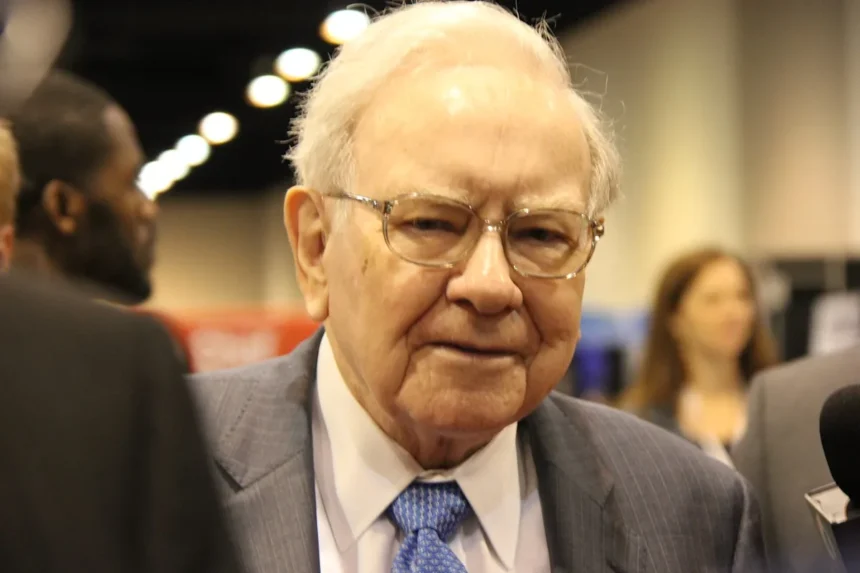
As Warren Buffett nears the conclusion of his remarkable tenure as CEO of Berkshire Hathaway, a notable shift in investment strategy has been observed, marked by an unprecedented selling streak. In the final 13 quarters of his leadership, Buffett sold more stock than he purchased, culminating in an extraordinary cash reserve of $373 billion by the end of 2025.
Notable adjustments to Berkshire’s portfolio were evident last quarter as Buffett reduced significant stakes in some of the company’s key holdings. Most prominently, he continued to pare down Berkshire’s substantial investment in Apple and initiated the sale of shares in Amazon. These transactions amounted to an estimated $4.5 billion.
Buffett’s relationship with Apple has been transformative; he invested over $30 billion between 2016 and 2018, transforming it into one of Berkshire’s largest investments. At its peak in 2023, Berkshire’s Apple shares were valued at nearly $200 billion, constituting over 50% of its marketable equity portfolio. Despite offloading more than three-quarters of those shares, the remaining stake is still valued at approximately $60 billion. Observations reveal that Apple’s trailing price-to-earnings (P/E) ratio soared from around 10 when Buffett began buying to an alarming 34 by the end of 2025. In light of these escalating valuations, new CEO Greg Abel indicated that future activities involving Berkshire’s Apple stake would be limited.
Buffett’s decision to reduce Amazon shares follows a period of stability since Berkshire first acquired them in early 2019, likely influenced by Todd Combs, who recently departed the company. Industry analysts speculate that this restructuring aligns with Buffett’s belief that many market segments are overvalued. While Amazon’s P/E ratio has improved to 32, concerns linger regarding its cash flow, especially given its substantial $200 billion capital expenditure budget for 2026 aimed at bolstering its AI infrastructure.
The trend of divesting does not end with Apple and Amazon, as Buffett’s selling activities reflect a cautious stance towards what he perceives as a potentially inflated market landscape. However, amidst these sell-offs, he appears to have identified a new investment opportunity.
In a surprising pivot, Buffett has taken a stake in a venerable institution—the New York Times, a company that traces its roots back to 1851. This move comes during challenging times for the print media industry, which is grappling with significant disruptions. Nonetheless, The New York Times has thrived, showing a 9% revenue growth in 2025 while maintaining operating profits robustly. The publisher’s successful digital transformation, which includes offerings in Cooking, Games, and sports coverage through The Athletic, has led to substantial subscriber growth, hitting 12.8 million—96% of whom are digital-only.
Despite the promising trajectory, investors currently face high entry costs, with shares trading close to 30 times forward earnings estimates. It is speculated that Buffett acquired his shares at a more favorable valuation, indicating a calculated risk on a high-quality investment.
As Buffett prepares to step down from his long-held position, these strategic moves mark a significant chapter in his investment legacy, showcasing a blend of caution in reducing exposure to high-valuation tech stocks while simultaneously seeking out enduring value in established brands like The New York Times.